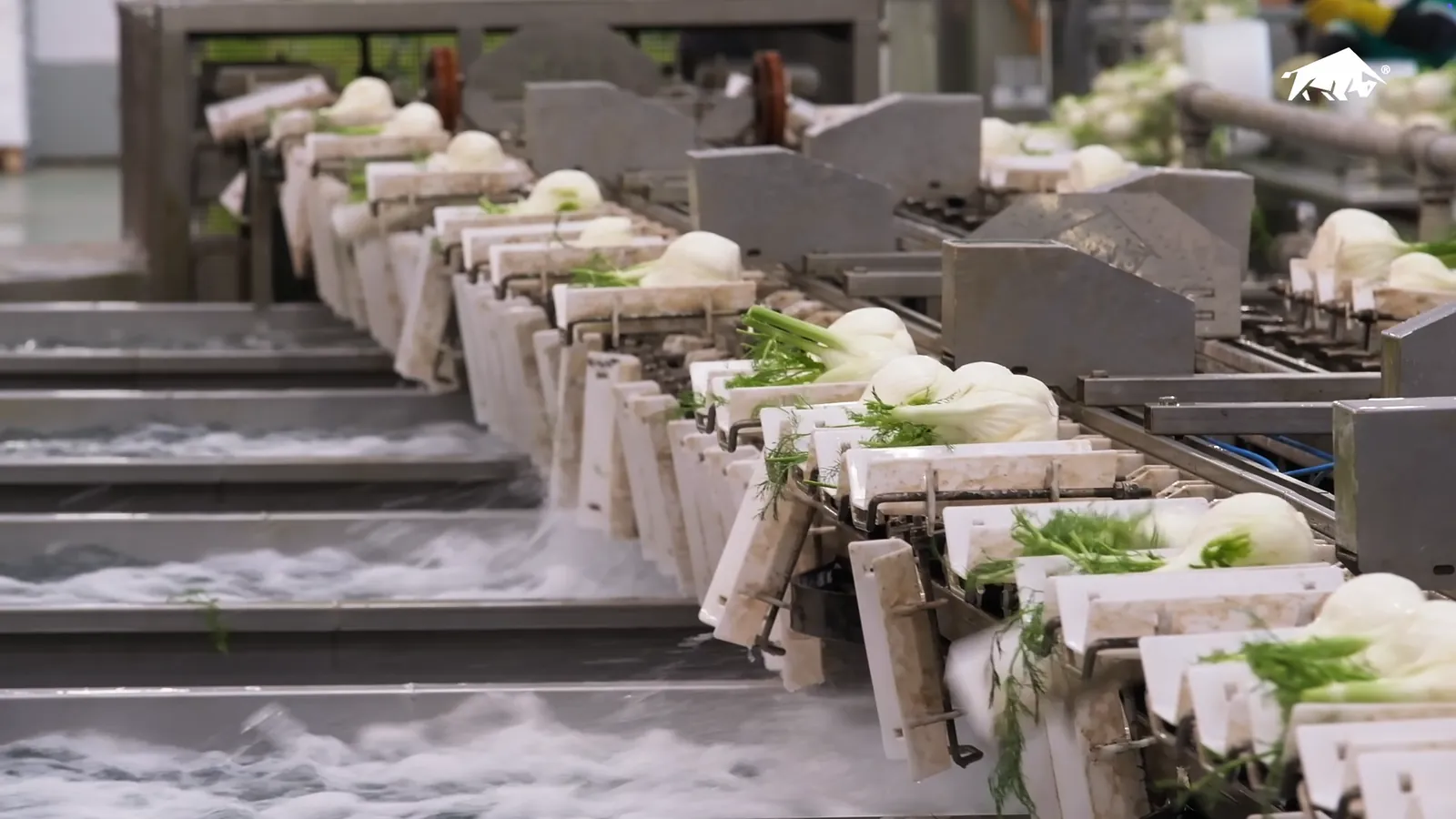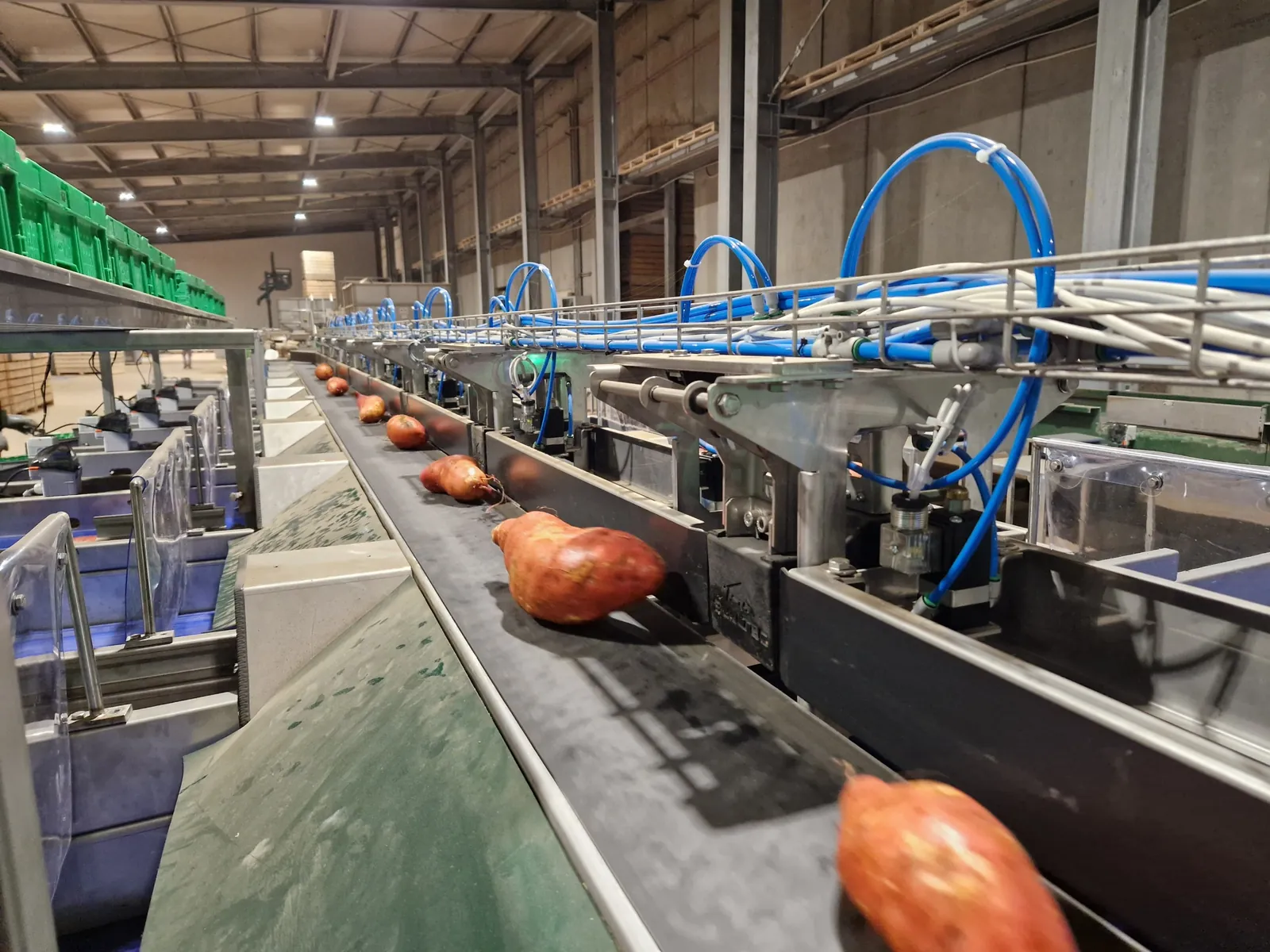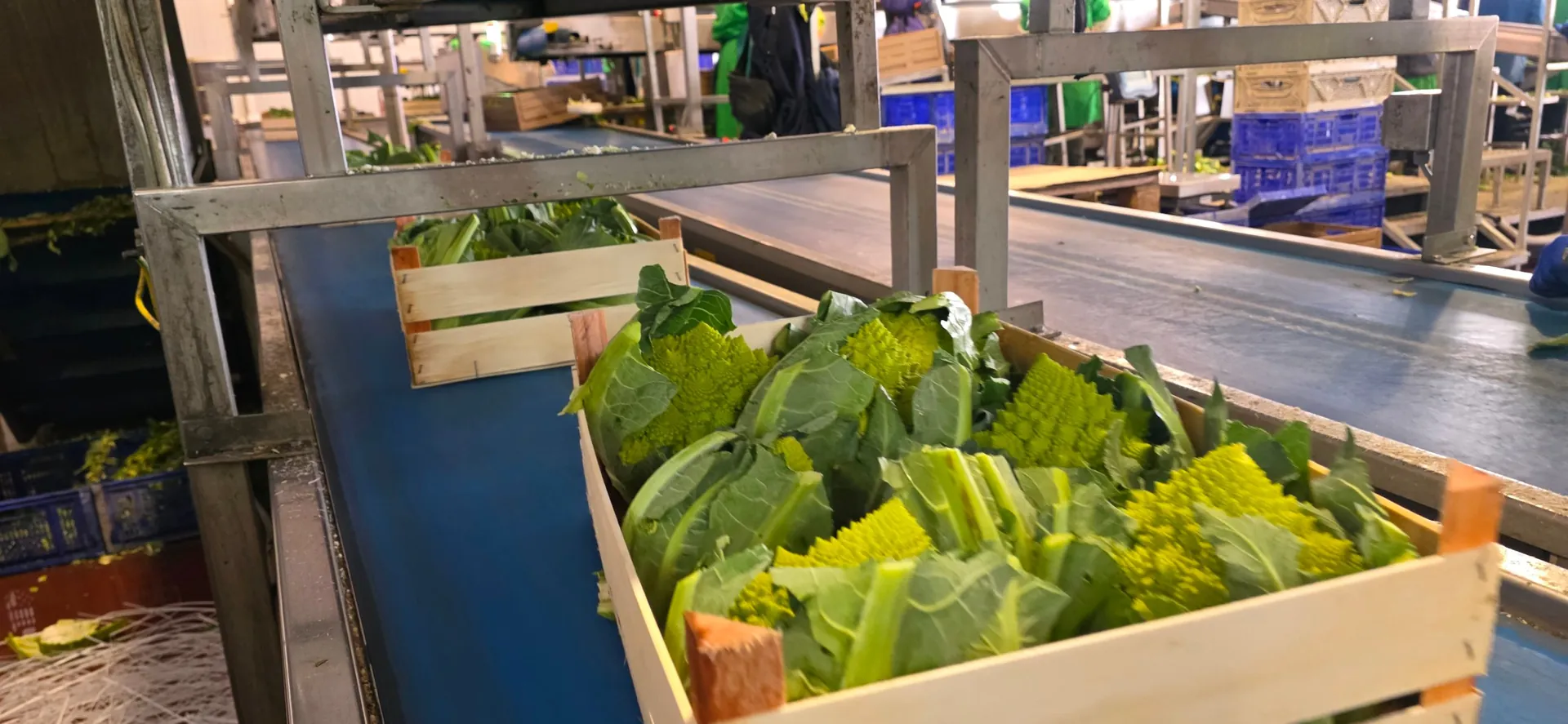

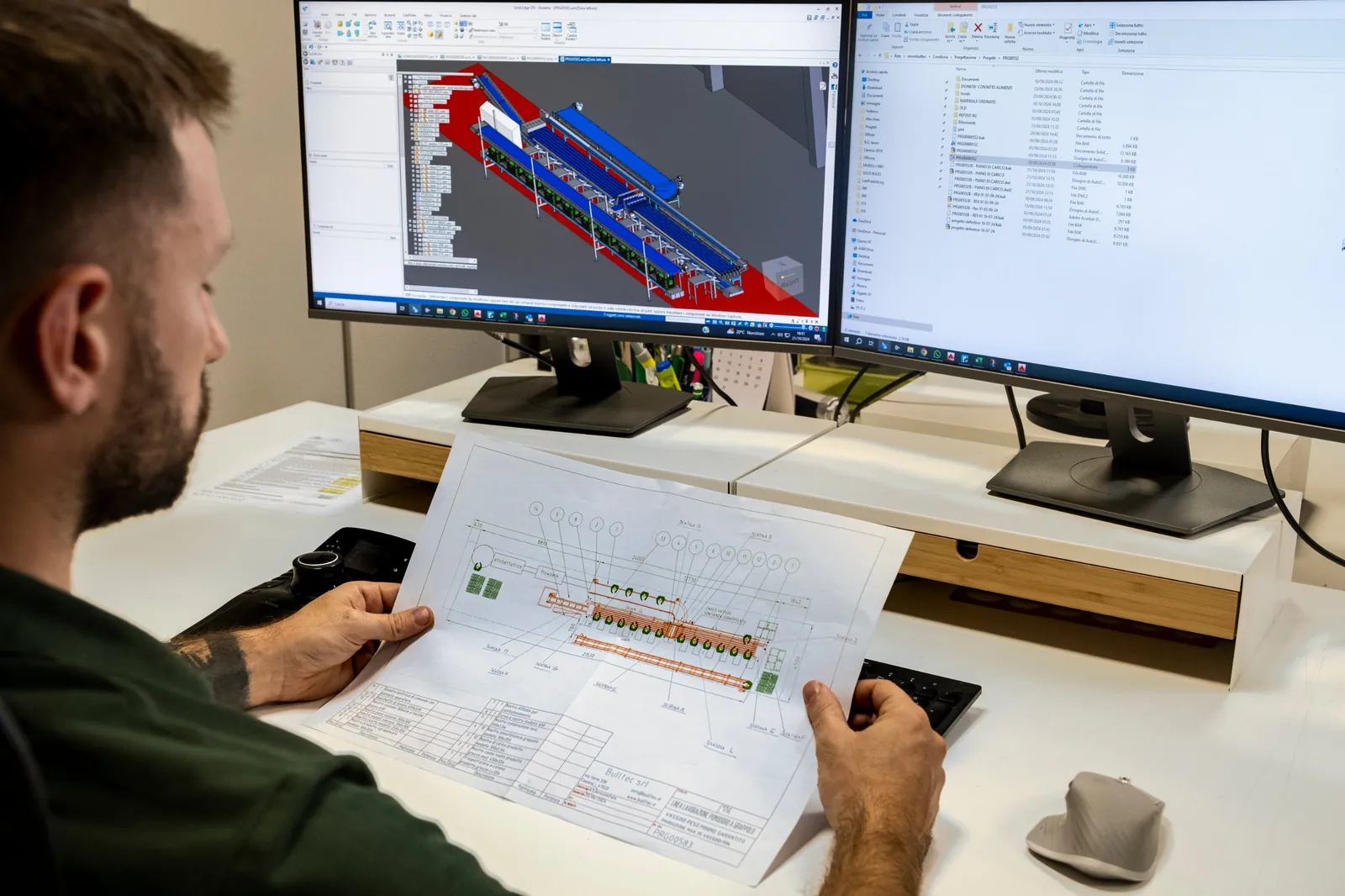
- The most costly mistakes in designing a modular line for fruit and vegetables arise upstream: sizing for the wrong peak, insufficient buffers and a non-scalable layout that force the plant to be rebuilt after 2-3 years.
- Underestimating format changeover times is the most frequent process mistake: if a line handles punnets, flowpack and cartons, every non-optimised changeover erodes OEE and reduces net productive hours.
- Integrating data and traceability (batches, weights, waste) only at the end is an integration mistake that makes KPIs invisible and blocks the calculation of the real ROI.
- The method for avoiding them is to design for flows (volumes, product mix, seasonality) before machines, defining target KPIs — OEE, waste, giveaway, kg per operator-hour — already at the layout stage.
Updated: August 2026 Methodological note: this article is based on Bulltec’s technical documentation on post-harvest automation for fruit and vegetables (KPIs: OEE, waste, giveaway, productivity, format changeover) and on public industry sources consulted on the layout and design of food packaging lines (M.H. Material Handling, Cosmopack). It contains no proprietary customer data or invented benchmarks: where certified data is not available, the text indicates verifiable criteria and variables.
What design mistakes in a modular line for fruit and vegetables are
Design mistakes in a modular line for fruit and vegetables are sizing, layout, process or data integration decisions that reduce the plant’s output or prevent it from growing in phases. A modular line is made up of connectable blocks — conveyors and buffers, sorting/grading, weighing, packaging, labelling, palletising — that should be able to be added over time without rebuilding the entire plant.
The most insidious mistake is designing the plant around the machines instead of around the flows. As indicated in Bulltec’s documentation on post-harvest automation for fruit and vegetables, the value of a line is concentrated where bottlenecks, avoidable waste and weight giveaway exist today, not in the simple nominal speed of the individual machine. When design starts from KPIs and volumes, subsequent mistakes become much less likely.
This article divides mistakes into three families — capacity and layout, process, data integration — because each requires different countermeasures and appears at different moments in the plant’s life cycle.
Capacity and layout mistakes: sizing for the wrong peak
Capacity and layout mistakes are the most costly to correct, because once the plant has been installed and the routes defined, moving modules means production stoppages and building works.
Sizing for the wrong peak
The first mistake is sizing the line on a volume figure that is not representative. Those who design for the average annual volume undersize the plant during seasonal peaks; those who design for the absolute peak of a single day oversize it and pay for unnecessary capex for 11 months of the year. The practical rule is to size for the recurring seasonal peak (the week or month of highest volume that recurs every year), not for the isolated anomaly, and to ensure that the bottleneck modules are scalable.
A fruit and vegetable producer with strong seasonality — for example grapes or peaches concentrated in a few weeks — must assess whether adding a grading module alongside during the peak is more cost-effective than oversizing all year round. This phased growth logic is at the heart of modular lines for fruit and vegetables and their benefits.
Insufficient buffers between modules
The second layout mistake is reducing buffers (accumulation areas) between modules to a minimum to save space. Without adequate buffers, a micro-stop on one module immediately propagates upstream and downstream, stopping the entire line. Buffers decouple the modules and absorb variations in pace between grading, weighing and packaging. A well-sized buffer allows packaging to keep working during a reel change or a brief stop of the grader, protecting overall OEE.
Non-scalable layout
The third mistake is designing a layout that occupies all the available space without leaving expansion corridors. A scalable layout reserves space and connections (electrical, compressed air, data) for future modules from the initial design. According to an analysis by M.H. Material Handling of layout mistakes in food packaging lines (2026), the five most frequent include precisely underestimating the space needed for maintenance and sanitation and failing to provide flexibility for format changeovers. Space that is not planned today becomes the constraint that prevents the addition of a combination weigher or a palletiser tomorrow.
| Layout mistake | Typical symptom | Countermeasure at the design stage |
|---|---|---|
| Wrong peak | Line saturated during peaks or unnecessary capex out of season | Size for the recurring seasonal peak, scalable modules |
| Insufficient buffers | A micro-stop blocks the whole line | Decoupling buffers between critical modules |
| Saturated layout | Impossible to add modules without rebuilding the plant | Corridors and utilities prepared for expansion |
| No maintenance space | Slow sanitation and interventions, long stoppages | Accessibility and technical space already in the drawing |
Process mistakes: format changeovers and bottlenecks
Process mistakes are those that erode efficiency day after day, often without being attributed to the design because they appear as “normal operating activity”.
Underestimating format changeovers
The most frequent process mistake is underestimating the time and frequency of format changeovers. In fruit and vegetables, a line often handles punnets, flowpack, nets, cartons and RPCs on the same plant: each changeover requires adjustments, replacement of tooling and a new recipe setting. If changeover time is not designed to be fast and repeatable, net productive hours fall drastically. As Cosmopack points out in a technical guide on mistakes in packaging lines, one of the most serious mistakes is designing the line without starting from a real analysis of the process, the format mix and the production targets.
The countermeasure is to state at the design stage how many format changeovers per day the line will have to handle and to choose modules with fast format changeover and standardised tooling. Format changeover time is one of the KPIs to measure before the investment, as described in the guide on how to calculate ROI and KPIs (OEE, waste, giveaway) for a modular line.
The “shifted” bottleneck
The second process mistake is solving a bottleneck without seeing that another one is created downstream. Upgrading grading without adapting weighing and packaging simply moves the bottleneck further along: the line does not increase its output, only the point at which the product accumulates changes. Correct modular design balances module capacities along the entire flow and identifies the constraint module (the slowest), which determines the real output of the entire line.
Forgotten maintenance and accessibility
The third mistake is failing to provide space and procedures for maintenance and sanitation. In fruit and vegetables the product is fresh and perishable: a line that is difficult to sanitise causes long stoppages and quality risks. Designing for accessibility (space for the operator, reachable components, cleanable surfaces) reduces planned and unplanned downtime, with a direct effect on OEE.
Want to set up your modular line starting from flows and KPIs, avoiding sizing mistakes? Talk to Bulltec’s engineers for an assessment of your plant.
Integration mistakes: data and traceability added too late
Integration mistakes concern the data flow, not just the product flow, and they are the ones that most often make it impossible to measure the return on investment.
Traceability integrated at the end
The most common integration mistake is treating data (batches, weights, waste, labels, pallets) as a final addition instead of as part of the line design. When traceability is added afterwards, the modules do not share information, batch-pallet association requires manual work and KPIs remain invisible. Designing the data flow together with the material flow means that each module records what it produces, as described in the guide on the modules of a fruit and vegetable line from reception to packaging.
KPIs not defined upstream
The second mistake is failing to define target KPIs before designing. Without measurable targets — OEE, waste, giveaway, kg per operator-hour, complaints — there is no criterion for saying whether the line is working as it should. Bulltec’s documentation on post-harvest automation is explicit: before “buying robots”, you need to measure OEE, waste, productivity, giveaway, complaints and recipe/format changeover times. These same KPIs become the basis for checking mistakes and for building the business case for modular lines for fruit and vegetables and their cost-effectiveness.
Unmeasured weight giveaway
The third integration mistake is ignoring giveaway, that is, the average overweight given away in fixed-weight packs. Giveaway is an invisible cost: it does not trigger an alarm, but it erodes the margin on every single pack. A line that does not integrate check weighing and the recording of overweight cannot reduce giveaway, because it does not see it. Integrating weighing and data from the design stage turns giveaway from a hidden cost into a controllable KPI.
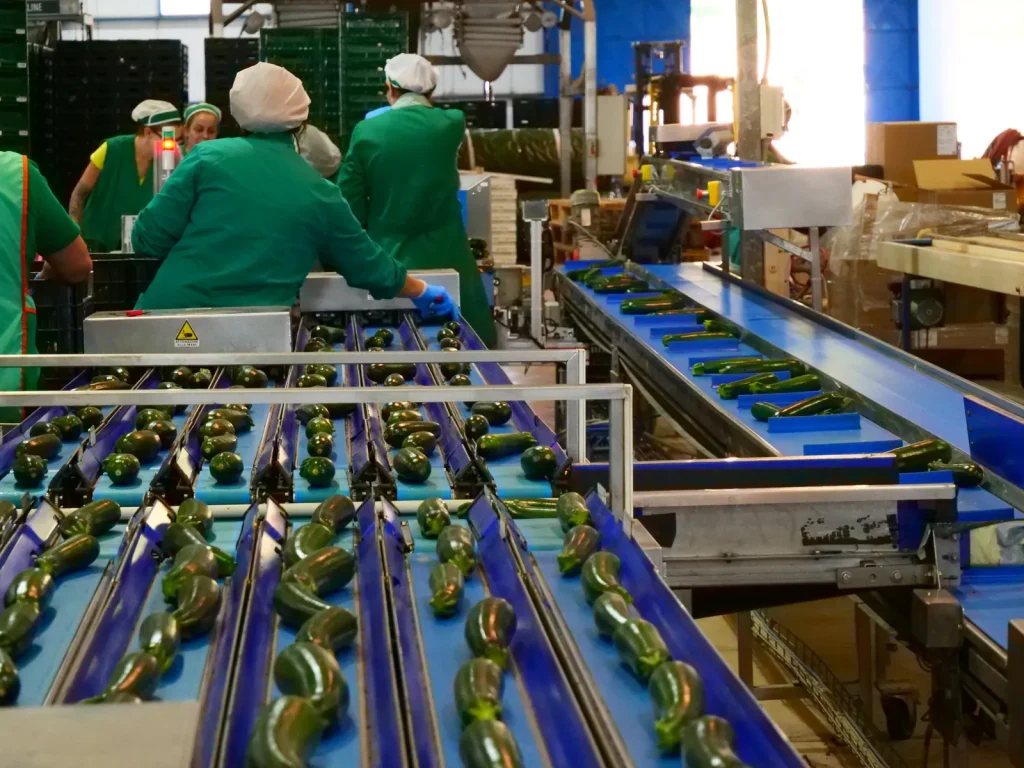
Quick checklist to avoid the most common mistakes
The following checklist summarises the countermeasures to verify before approving a modular line design for fruit and vegetables.
- Volumes: I have sized for the recurring seasonal peak, not for the isolated anomaly or for the annual average alone.
- Scalability: the layout reserves space and utilities for future modules.
- Buffers: critical modules are decoupled by adequate accumulation areas.
- Format changeovers: I have stated how many changeovers per day are needed and chosen fast-changeover modules.
- Balancing: I have identified the constraint module and balanced capacities along the flow.
- Maintenance: space and surfaces allow fast sanitation and interventions.
- Data: the data flow (batches, weights, waste, pallets) is designed together with the material flow.
- KPIs: OEE, waste, giveaway, kg per operator-hour and complaints are defined as targets before the design.
FAQ
What is the most costly mistake in designing a modular line for fruit and vegetables?
The most costly mistake is sizing the line for the wrong volume peak and adopting a non-scalable layout. Those who design for the average annual volume undersize the plant during seasonal peaks; those who design for the isolated anomaly pay for unnecessary capex for most of the year. A layout that occupies all the space without expansion corridors prevents modules from being added in the future, forcing the plant to be rebuilt. The countermeasure is to size for the recurring seasonal peak and reserve space and utilities for phased growth, consistent with the modular logic.
Why do underestimated format changeovers reduce the output of a fruit and vegetable line?
Underestimated format changeovers reduce output because in fruit and vegetables a line often handles punnets, flowpack, nets and cartons on the same plant, and each changeover requires adjustments, replacement of tooling and a new recipe. If the changeover is not designed to be fast and repeatable, every transition takes away net productive hours and lowers OEE. Format changeover time is a KPI to be defined at the design stage, stating how many changeovers per day the line must handle and choosing modules with fast changeover and standardised tooling.
How do you avoid the mistake of integrating traceability too late?
The mistake of integrating traceability too late is avoided by designing the data flow together with the product flow, not as a final addition. Each module — grading, weighing, packaging, labelling, palletising — must record batches, weights and waste from the outset, so that batch-pallet association is automatic and KPIs remain visible. Defining target KPIs (OEE, waste, giveaway, kg per operator-hour, complaints) before the design makes traceability serve performance control and the real measurement of the plant’s ROI.
What is the “shifted” bottleneck and how can it be prevented?
The “shifted” bottleneck is the mistake made when a single module — for example grading — is upgraded without adapting those downstream. The line does not increase its output: the point where the product accumulates simply moves further along, to weighing or packaging. It is prevented by balancing the capacities of all modules along the flow and identifying the constraint module, that is, the slowest one, which determines the real output of the entire line. Correct modular design starts from this balancing analysis.
Sources
- Bulltec — Post-harvest automation for fruit and vegetables: https://bulltec.it/en/post-harvest-automation-for-fruit-and-vegetables-how-to-make-processing-more-efficient-from-reception-to-packaging/
- M.H. Material Handling — Linee di confezionamento alimentare: i 5 errori di layout più frequenti: https://blog.mhmaterialhandling.com/linee-di-confezionamento-alimentare-i-5-errori-di-layout-piu-frequenti/
- Cosmopack — Errori nelle linee di confezionamento: problemi e soluzioni: https://cosmopack.eu/errori-linee-confezionamento/
Design your modular line without costly mistakes
Avoiding sizing, format changeover and data integration mistakes starts from a design built on flows and KPIs, not on individual machines. Contact Bulltec for an assessment of your fruit and vegetable line.
Find out more with the other guides in this series: