
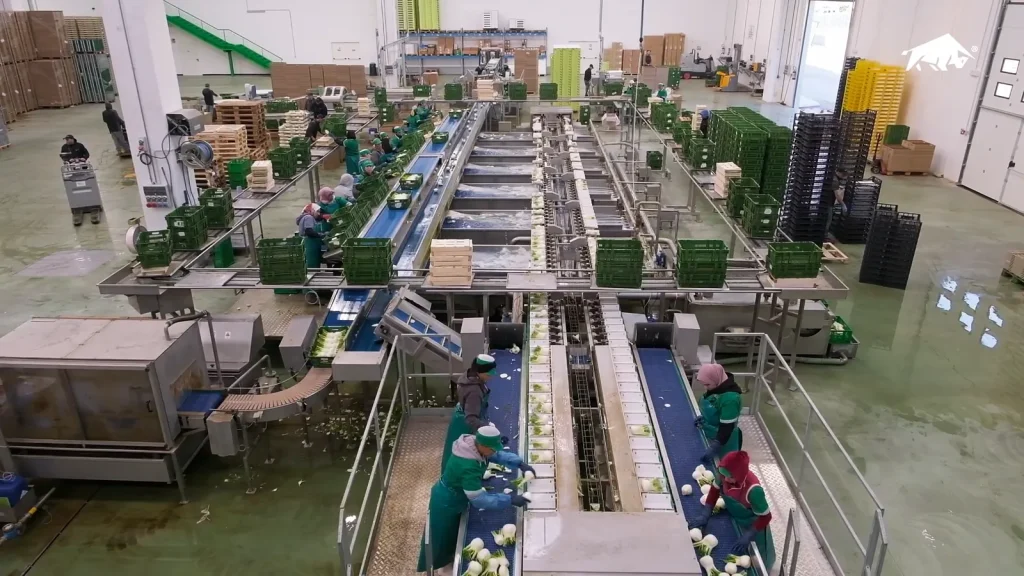
- A modular fruit and vegetable line is made up of functional blocks connected in sequence: reception, conveyors and buffers, sorting and grading, weighing, packaging, labelling and palletising, each of which can be designed and expanded independently.
- The choice of each module depends on three concrete variables: type of product (grapes, peppers, fennel, potatoes), packaging format (punnets, flowpack, nets, cartons, RPCs) and frequency of format changeovers during the working day.
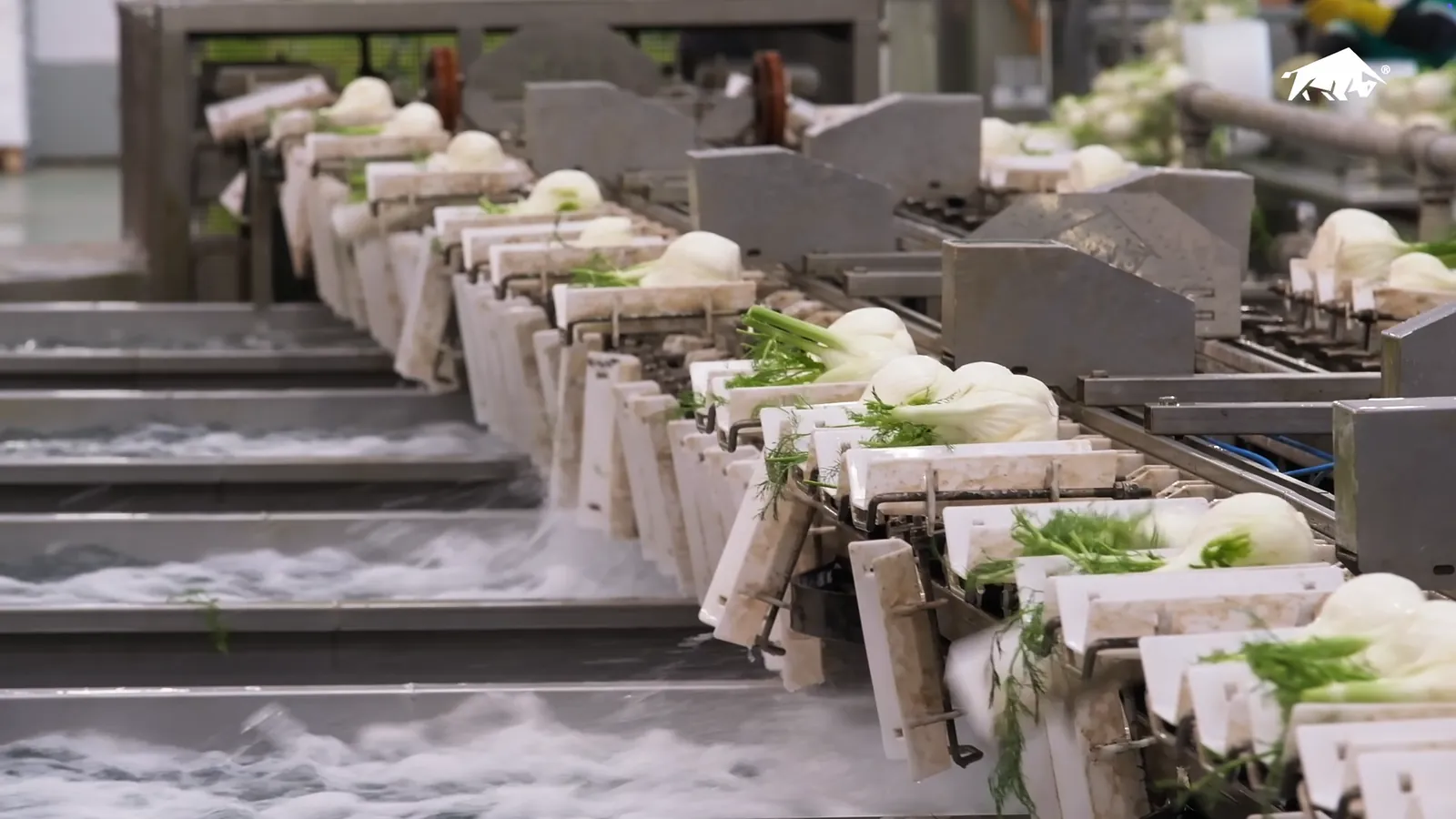
- Bulltec electronic paddle grading modules classify the product by weight and size while handling it gently, while combination weighing reduces giveaway (average overweight) in fixed-weight packaging.
- Each module must move two flows in parallel: the material flow (the physical product) and the data flow (batches, weights, waste, labels), because traceability added afterwards costs more and integrates less well.
- Designing “in blocks” makes it possible to start from a critical module (often grading or weighing) and add the others over time without rebuilding the entire plant.
Updated: August 2026 Methodological note. This guide is based on the public documentation of Bulltec products (electronic paddle graders for fennel, peppers and table grapes, weighing and tray packaging lines) and on the Bulltec article “Post-harvest automation for fruit and vegetables” published on 29 July 2026. It contains no proprietary customer data or results from unverifiable cases.
What the modules of a fruit and vegetable line are and why think in blocks
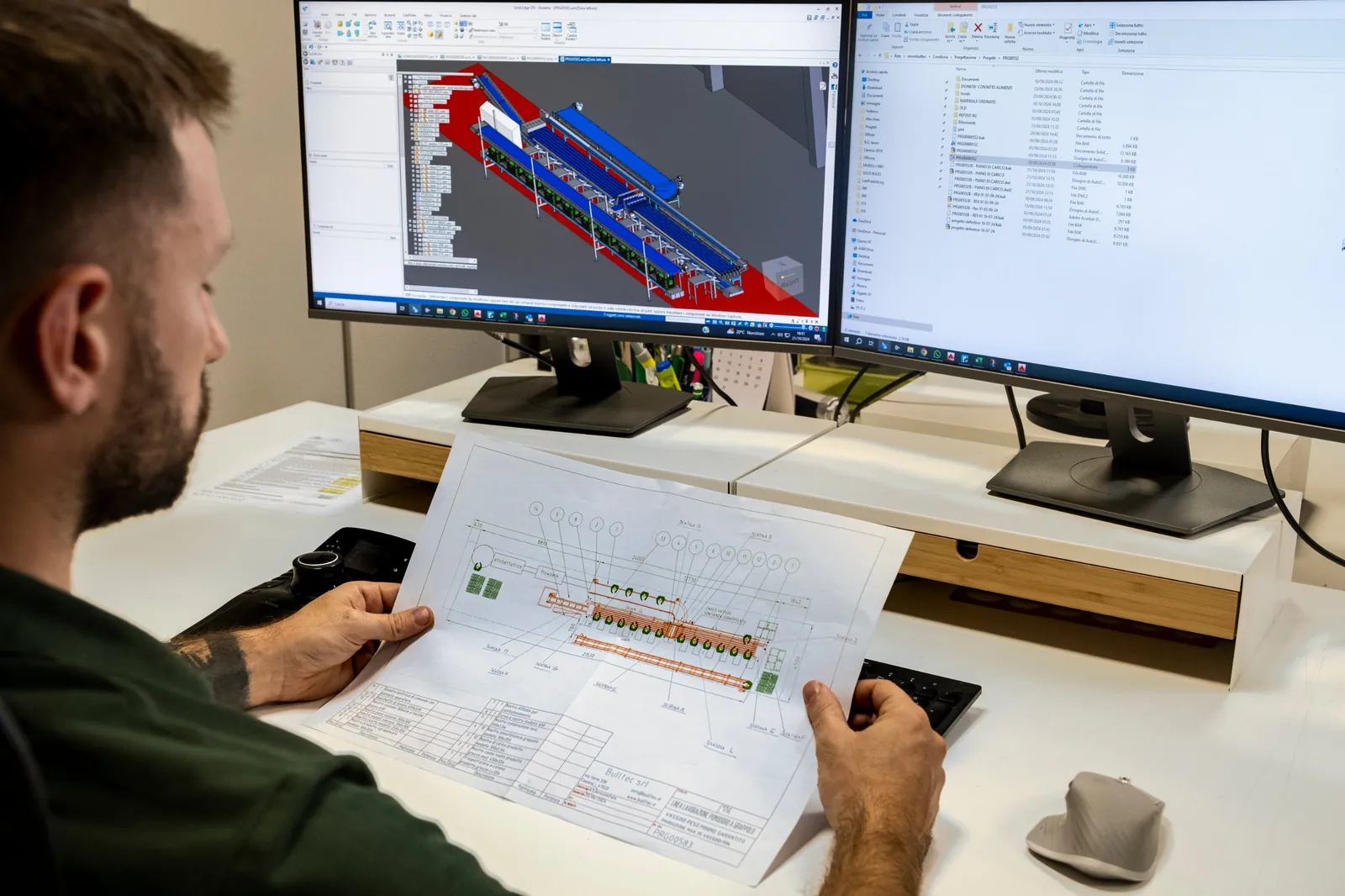
A module of a fruit and vegetable line is a self-contained functional block that performs a single operation of the post-harvest cycle and connects to adjacent modules via conveyors and data exchange. The modular logic replaces the “monolithic” line (designed and built all at once) with a scalable architecture in which each block can be sized, replaced or added at a later stage.
According to the Bulltec article on post-harvest automation (2026), post-harvest includes all activities between the arrival of the product (bins, crates, pallets, trucks) and the shipping of finished pallets with documentation. Thinking in blocks serves to spread the investment over time: you start from the module where bottlenecks, avoidable waste or weight giveaway are currently concentrated, and add the others as volumes and product mix grow.
To understand when this architecture pays off compared with a closed plant, it is useful to read the main article Modular lines for fruit and vegetables: when they pay off and what benefits they offer.
Module map: from reception to pallet
The standard sequence of a fruit and vegetable line consists of six connected blocks. Each block performs a precise function and passes on to the next both the product and the information that accompanies it.
| Module | Main function | What determines the choice | KPI it affects |
|---|---|---|---|
| Reception and feeding | Unloading bins/crates, dosing towards the line | Hourly volume, type of incoming packaging | Productivity (kg per operator-hour) |
| Conveyors and buffers | Handling and accumulation between stages | Product fragility, imbalances in pace | Line stoppages, impact waste |
| Sorting and grading | Classification by weight, size, defects | Product and commercial categories | Waste, complaints, uniformity |
| Weighing | Formation of the target quantity/weight | Fixed-weight or piece-count format | Weight giveaway |
| Packaging | Filling and closing the format | Packaging (punnet, flowpack, net, carton) | Format changeover times |
| Labelling and pallet | Marking, checking, palletising | Large-scale retail requirements and traceability | Documentation errors, returns |
For an extended description of how the blocks are linked and synchronised along the entire line, see Modules and configurations: from reception to packaging in a fruit and vegetable line.
Conveyors and buffers: the line’s “circulatory system”
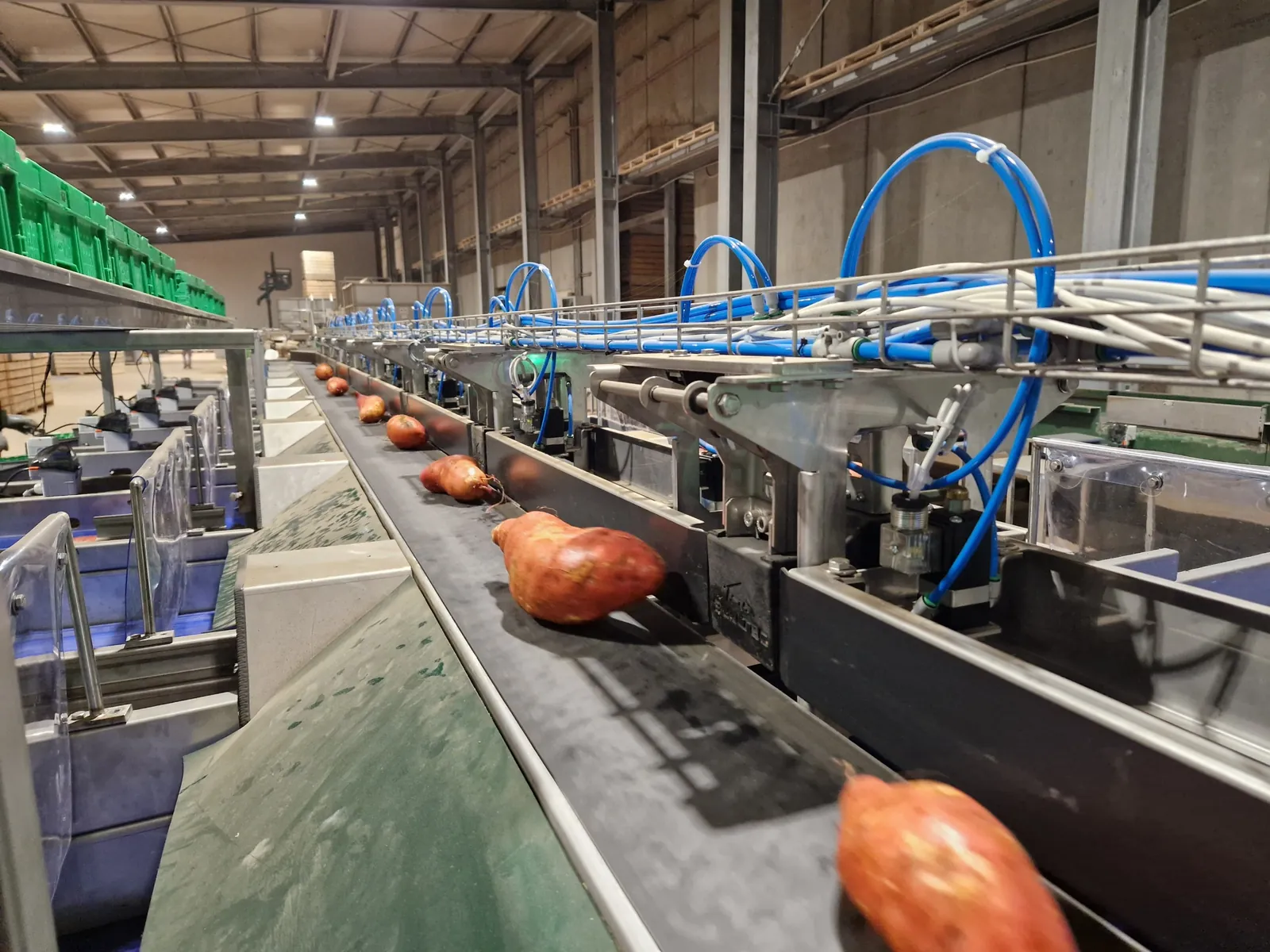
Conveyors move the product between modules, while buffers are controlled accumulation areas that absorb the differences in pace between a fast stage and a slow stage. A well-sized buffer prevents a slowdown in packaging from stopping grading upstream. The Bulltec article (2026) explicitly lists “conveyors and buffers” among the key technologies of post-harvest automation, together with grading, weighing and data integration.
The main risk is designing buffers that are too small for the wrong peak: the product stagnates, suffers impacts and generates waste. For fragile products such as table grapes or tomatoes, conveyors must reduce drops and falls.
Sorting and grading: where commercial uniformity is created
Grading classifies the product by weight and size, separating the commercial categories. Bulltec designs and manufactures electronic paddle graders for processing, sorting and packaging vegetables and fruit, with versions dedicated to fennel, peppers and table grapes. The Bulltec paddle grader for peppers classifies by piece size and weight even with irregular shapes, handling the product gently.
A consistent grading module reduces the “operator-dependent” effect: quality standards become replicable and complaints about non-uniform packs decrease.
Combination weighing: the module that cuts giveaway
Combination weighing composes the target weight by combining several portions of product to get as close as possible to the declared weight, reducing average overweight. In fixed-weight packaging, giveaway is an invisible cost: every gram given away per pack, multiplied by thousands of units, erodes the margin. Bulltec solutions for table grapes integrate ultra-gentle combination weighing and packaging that protect bunches and berries.
To understand how to translate the reduction in giveaway into euros and payback, see Calculating ROI and KPIs (OEE, waste, giveaway) for a modular line.
Packaging and labelling: where format changeovers are decided
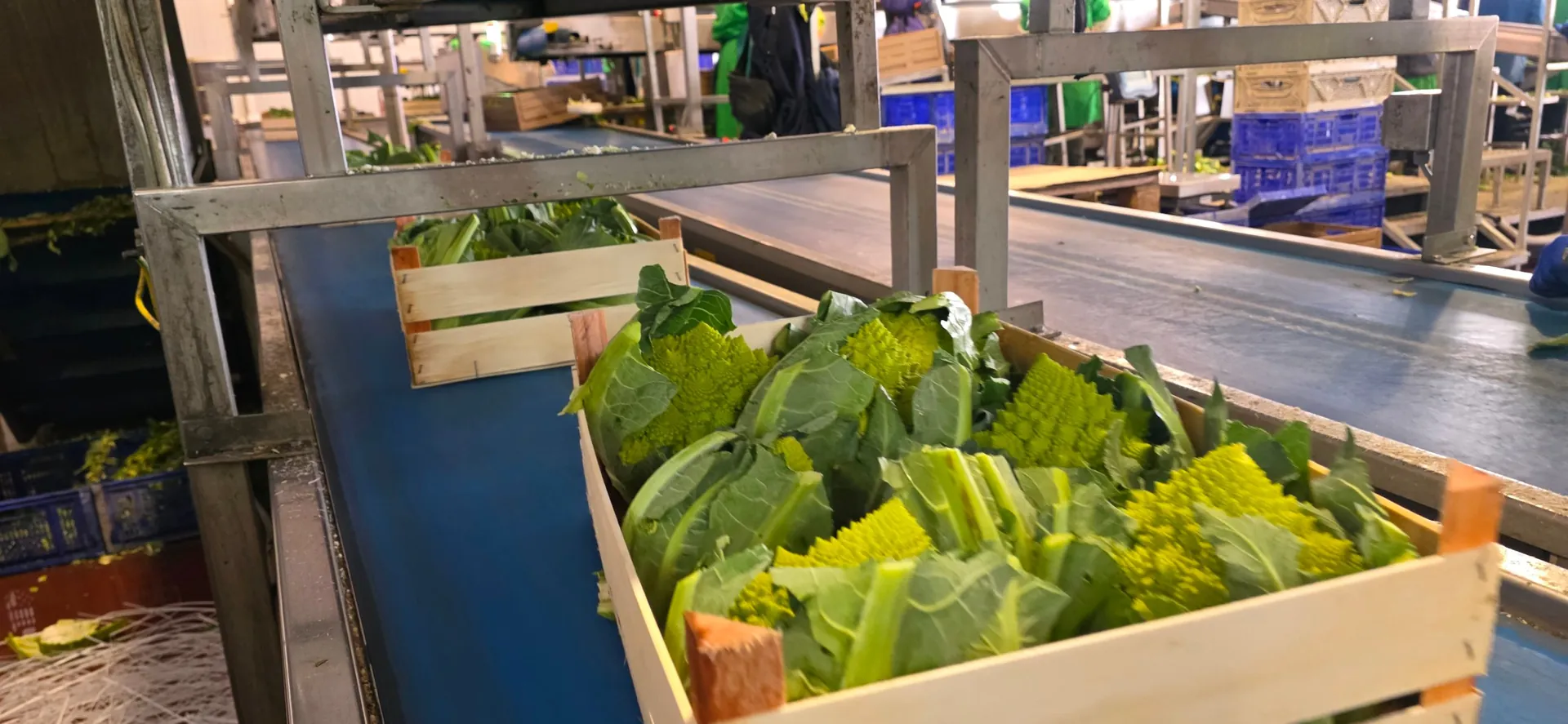
The packaging module fills and closes the sales format: punnet, flowpack, net, carton or RPC. It is the block most sensitive to format changeovers, because each type of packaging requires different tooling. The Bulltec tray packaging and weighing line aims to save time, staff and product. Labelling completes the cycle by applying weight, batch and mandatory information required by large-scale retail.
How to choose modules based on product and packaging
The configuration of a modular fruit and vegetable line always starts from three operational questions, not from a machine catalogue.
- What is the product and how fragile is it? Table grapes require ultra-gentle conveying and weighing; peppers require grading capable of handling irregular shapes; fennel and potatoes have different sorting and yield requirements.
- What is the prevailing packaging format? A fixed-weight line on punnets prioritises combination weighing; a piece-count line shifts the emphasis to sorting and counting.
- How many format changeovers do I make in a day? If you change format several times a day, the packaging module must prioritise speed of tooling changeover; if you run long campaigns of the same format, you can optimise for maximum throughput.
Material flow and data flow: two flows to design together
Each module must move two flows in parallel. The material flow is the physical product moving from reception to pallet. The data flow is the set of information that accompanies it: incoming batch, recorded weight, waste generated, label issued, pallet built. The Bulltec article (2026) specifically lists “data integration (batches, weights, waste, pallets)” among the key technologies.
Designing the data flow together with the material flow, and not afterwards, is the difference between a line that produces useful data for quality and performance and a line that loses it. Adding traceability after installation costs more and integrates less well: it is one of the mistakes described in Mistakes to avoid when designing a modular line for fruit and vegetables.
Want to configure the right modules for your product and formats? Talk to Bulltec about a bespoke line starting from the bottleneck that costs you the most today.
Integration and traceability: the data that makes every module useful
Integration connects the modules into a single system in which the product and its data move forward in sync. An isolated module that does not communicate weight, batch and waste to neighbouring blocks creates “islands” that are difficult to manage. Batch traceability associates each pack with the origin of the product, its actual weight and any waste: information required by large-scale retail and valuable for reducing complaints and returns.
According to the Bulltec article (2026), ROI improves when automation is designed as a line system (layout, synchronisation, sanitation, data) and not as a single machine. In practice, the data collected from grading and weighing makes it possible to measure OEE, waste, productivity in kg per operator-hour and giveaway, the same KPIs to monitor before and after the investment.
FAQ
What are the basic modules of a fruit and vegetable line?
There are six basic modules in a fruit and vegetable line: reception and feeding, conveyors and buffers, sorting and grading, weighing, packaging, labelling and palletising. Each module performs a single operation and connects to adjacent blocks via physical conveyors and data exchange (batch, weight, waste). The Bulltec article on post-harvest automation (2026) lists conveyors and buffers, grading/sorting, combination weighing, labelling and data integration among the key technologies. The modular logic makes it possible to size or add each block independently, without rebuilding the entire plant.
How do you choose the grading module based on the product?
The choice of grading module depends on the product and on the commercial categories to be obtained. Bulltec manufactures dedicated electronic paddle graders: the version for peppers classifies by piece size and weight even with irregular shapes, the one for fennel is designed for gentle sorting and high yield, while the solutions for table grapes protect bunches and berries. The decisive criterion is the fragility of the product and the level of uniformity required by the end customer: consistent grading reduces the operator effect and makes quality standards replicable.
Why does combination weighing reduce costs?
Combination weighing reduces costs because it lowers giveaway, that is, the average overweight given away in every fixed-weight pack. By combining several portions to get close to the declared weight without falling below the legal threshold, the module minimises excess grams. In fixed-weight packaging, giveaway is an invisible cost that, multiplied by thousands of packs a day, erodes the margin. Bulltec solutions for table grapes integrate ultra-gentle combination weighing and packaging. To estimate the savings in euros, see the Bulltec guide on the ROI and KPIs of modular lines.
Do all the modules need to be installed straight away?
No, the modular architecture exists precisely so that you do not have to install all the modules straight away. According to the approach described by Bulltec (2026), it is best to start from the block where bottlenecks, avoidable waste or weight giveaway are currently concentrated, often grading or weighing, and add the other modules as volumes and product mix grow. The condition for this to work is to design a scalable layout and an integrated data flow from the outset: adding traceability or buffers afterwards costs more and integrates less well.
Sources
- Bulltec — Post-harvest automation for fruit and vegetables (2026): https://bulltec.it/en/post-harvest-automation-for-fruit-and-vegetables-how-to-make-processing-more-efficient-from-reception-to-packaging/
- Bulltec — Electronic grader for peppers: https://bulltec.it/en/peppers/
- Bulltec — Electronic grader for fennel: https://bulltec.it/en/fennels/
- Bulltec — Electronic grader for table grapes: https://bulltec.it/en/table-grape/
Configure your modular line with Bulltec
Bulltec designs and manufactures electronic paddle graders and bespoke complete lines for processing, sorting and packaging vegetables and fruit. Contact Bulltec to configure the right modules starting from the most costly bottleneck in your line.
Find out more with this related content:
- Modular lines for fruit and vegetables: when they pay off and what benefits they offer
- Calculating ROI and KPIs (OEE, waste, giveaway) for a modular line
- Modules and configurations: from reception to packaging in a fruit and vegetable line
- Mistakes to avoid when designing a modular line for fruit and vegetables