
- Packing house flow optimisation does not just mean increasing machine speed: it means reducing waiting times, build-ups, rework and unnecessary handling along the entire line.
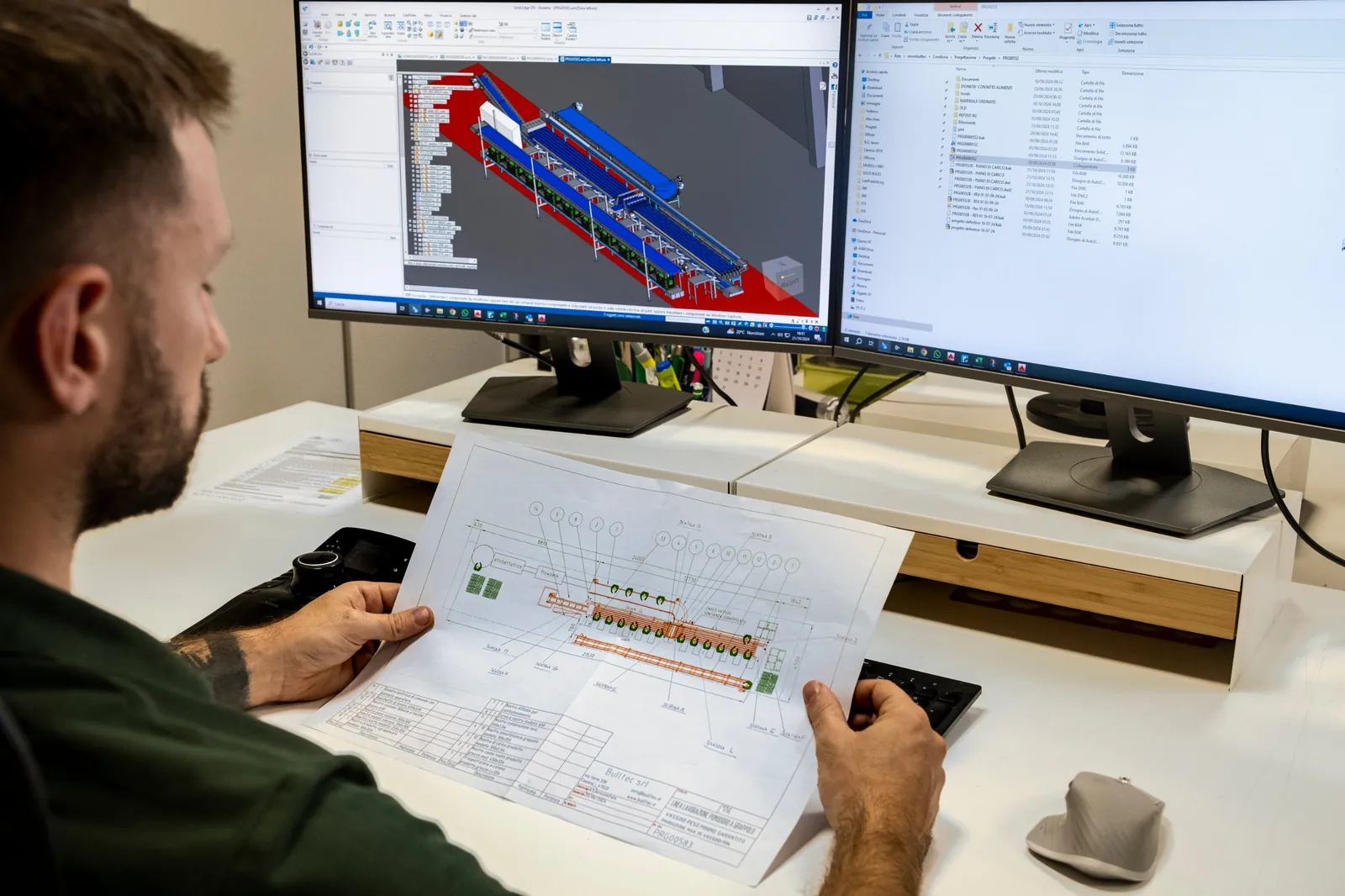
- The starting point is a real Value Stream Mapping, with data on cycle times, WIP, changeovers, micro-stops and quality for each stage.
- The most frequent bottlenecks are concentrated between unloading, sorting, drying, grading, packaging and end of line, but the problem often stems from weak standards and unsynchronised layouts.
- Standard work, line balancing, smart buffers and preventive maintenance often have a faster impact than a major plant investment.
- This in-depth article is part of the Optimising flows and layout of the fruit and vegetable line path and complements the Complete guide to increasing productivity and control in the packing house.
In a fruit and vegetable processing centre, packing house flow optimisation serves to keep product moving steadily from unloading to shipping, without queues, knock-on stoppages and disorganised operator saturation. When the layout is unbalanced, the bottleneck does not just slow down one stage: it increases WIP, errors, lead times and pressure on quality control. That is why flow improvement must be read together with performance data, as explained in KPIs and OEE for the fruit and vegetable packing house.
Packing house flow optimisation: where to really start
The first rule is simple: you cannot optimise what you cannot see. In the packing house, the real bottleneck rarely coincides with the machine that “seems slowest”. More often it is the stage with the lowest effective capacity, that is, the one that combines speed, availability, quality and operational stability.
Value Stream Mapping in the packing house
Value Stream Mapping, or VSM, is the map of the physical and information flow of the product. In practice, it shows:
- where the product gains value;
- where it waits;
- where it is moved unnecessarily;
- where waste, rework or time losses are generated.
In the fruit and vegetable packing house, the VSM must cover at least these stages: unloading, pre-sorting, washing, drying, grading, packaging, palletising and shipping.
What to record during a sample shift
To build a useful map, simply follow a batch or a product line for a representative shift and record:
- actual cycle time of each stage;
- waiting time between one stage and the next;
- WIP, that is, product that is stationary or queuing;
- micro-stops and long stoppages;
- format changeover or product line changeover times;
- rework, waste and reprocessing;
- metres travelled by operators and materials.
This data set avoids “gut-feeling” decisions. If you need a broader view of governance, data and control, the reference is the Complete framework for fruit and vegetable line productivity and control.
Value Stream Mapping and packing house flow optimisation: what to measure
A good map is not limited to machine times. It must compare value-added time and total lead time. In many processing centres, the product is processed for just a few minutes but remains stationary or waiting for much longer.
Value-added times vs waiting times
Typical example: the grader runs steadily, but upstream unloading arrives in waves and downstream packaging cannot absorb the pace. The result is a line that alternates between saturation and gaps. On the surface the machine “is running”, but the overall flow is losing capacity.
For each stage, it is worth measuring:
- nominal capacity;
- effective capacity;
- variability of the incoming flow;
- stability of the outgoing flow.
WIP and unnecessary steps
High WIP is often mistaken for operational security. In reality, in the packing house it is often the symptom of an imbalance: product is accumulated to protect an unstable or slow stage. The same applies to redundant manual steps, non-standardised double checks or packaging material located far from the workstation.
A good layout must reduce:
- crossings between people, pallets and product;
- lateral handling;
- waiting times for packaging supplies;
- product backtracking;
- transfers to improvised buffer areas.
Typical bottlenecks by stage in the fruit and vegetable processing centre
Bottlenecks are not the same for every line, but very similar patterns recur in the packing house.
| Stage | Typical signals | Frequent causes | Priority action |
|---|---|---|---|
| Unloading and reception | Truck queues, mixed batches, saturation of the intake area | unplanned slots, insufficient FIFO space, slow checks | separate areas, define arrival windows, standardise check-in |
| Sorting and pre-sorting | overloaded operators, inconsistent quality | product variability, unbalanced workstations | redistribute workloads, define reject standards |
| Washing and drying | build-ups upstream, wet product downstream | unsynchronised speeds, insufficient drying | synchronise capacity and process parameters |
| Grading | queues, rework, uneven deviations | non-standard settings, slow recipe changeover, insufficient precision | standard recipes, data control, appropriate technology |
| Packaging | giveaway, incomplete packs, waiting for material | unstable weighing, non-ergonomic bench layout | material replenishment, more stable weighing, operator balancing |
| End of line and palletising | cases ready but not shipped, continuous slowdowns | labelling, stretch wrapping or pallets not synchronised | controlled buffers, end-of-line automation, dispatch priorities |
The critical link between grading and packaging
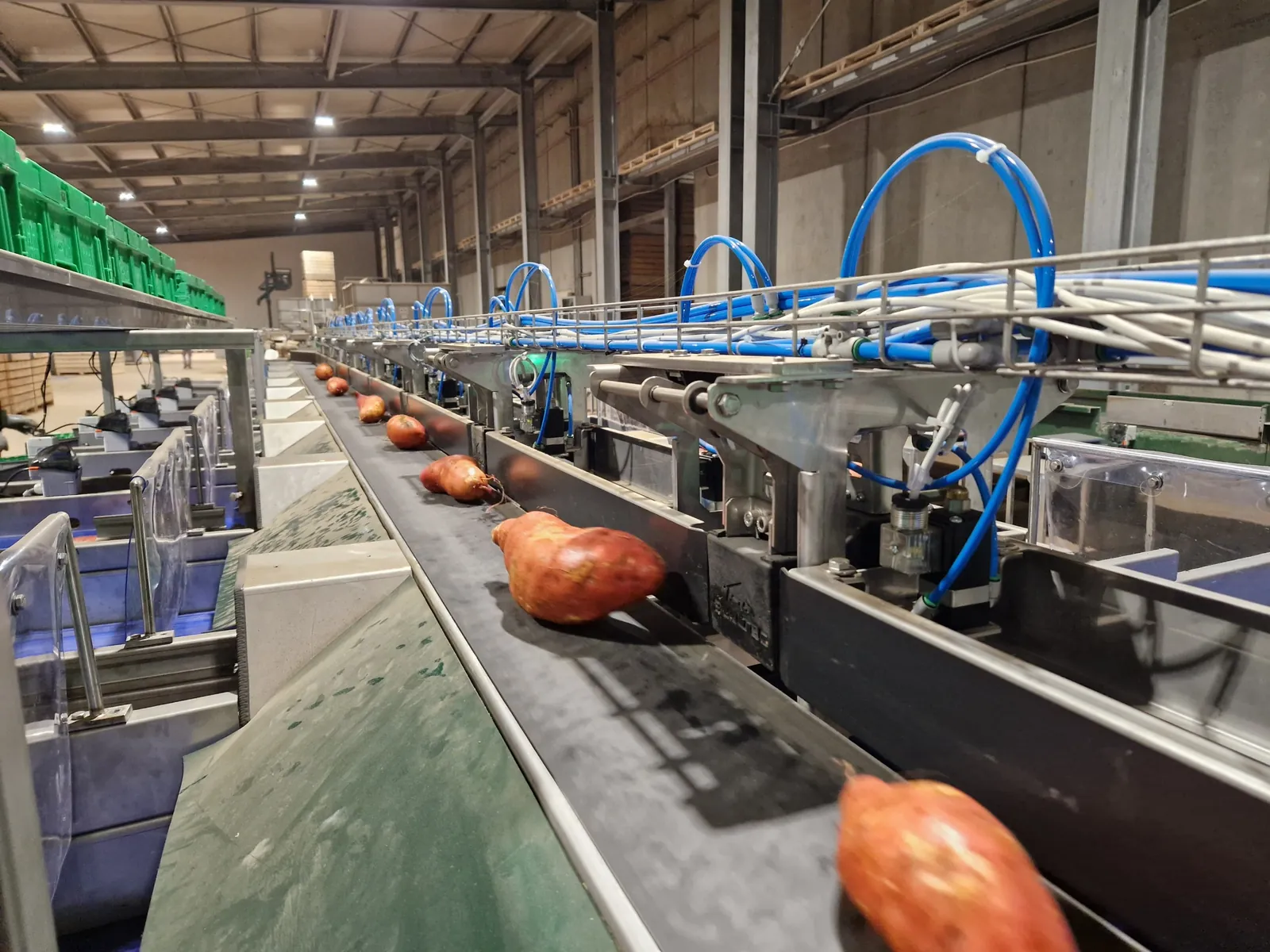
This is one of the most sensitive points. If grading is precise but discharges product discontinuously, packaging works in fits and starts. If, on the other hand, packaging is too manual, grading has to slow down or discharge into accumulation.
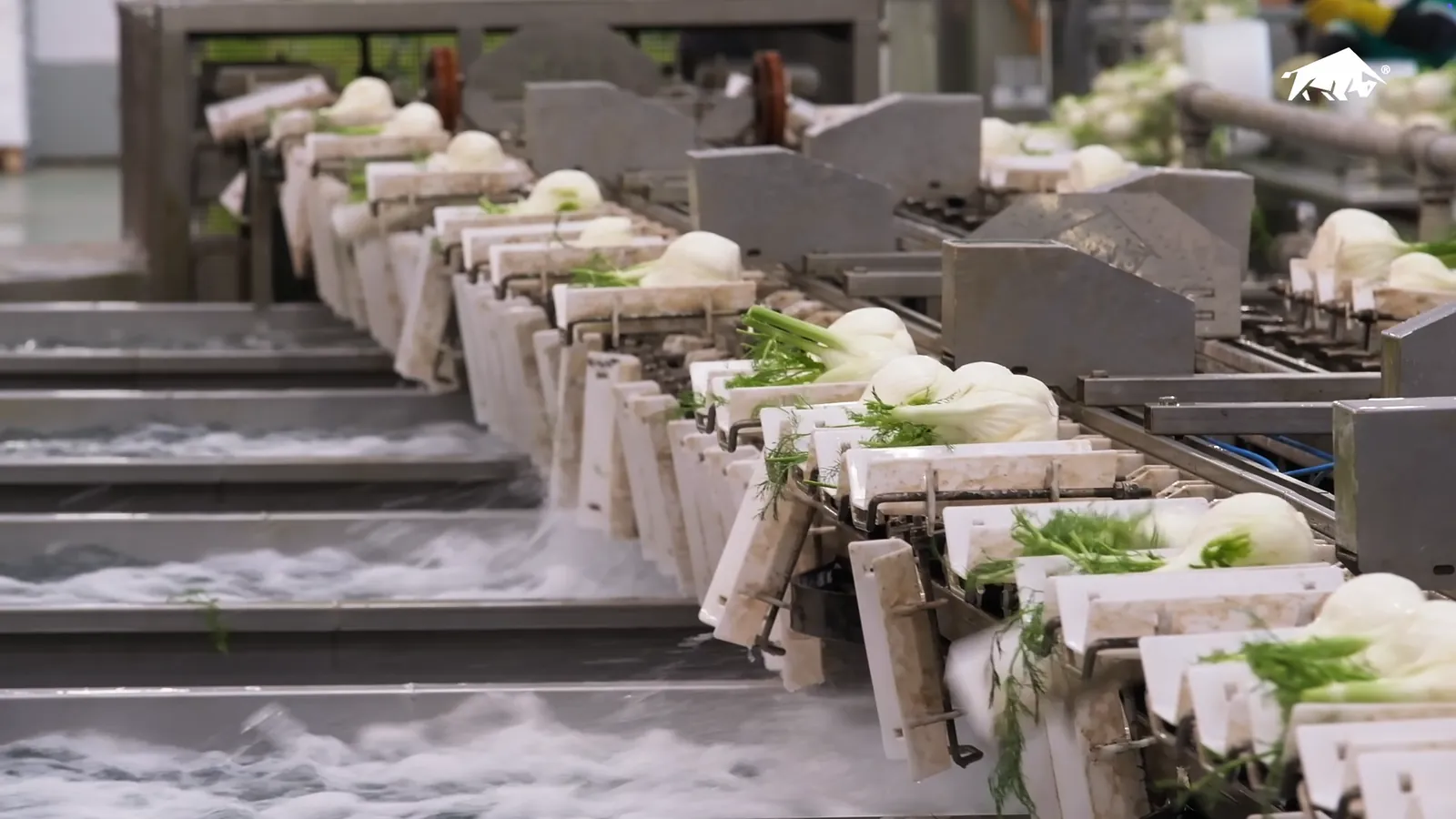
This is where technology and integration come into play. Bulltec electronic paddle graders are designed for precise and consistent sorting, with software that allows rapid parameter adjustments. On the Bulltec website, some configurations are described as achieving a precision of up to ±3 mm for size grading via machine vision and a productivity of up to 3 products per second, depending on machine load and product. For specific product lines, a paddle grader for fennel is also available, useful when the layout must adapt to dedicated morphological and management requirements.
When the bottleneck is not in the machine but in rework
Many lines lose capacity not in the main processing stage, but in rework caused by incorrect weighings, non-compliant labels or mixed batches. In these cases throughput falls because the line has to go backwards. That is why flows and layout must be read together with error prevention, as explored in Common mistakes in the fruit and vegetable processing centre and how to avoid them.
Packing house flow optimisation measures that deliver quick results
Before completely rethinking the plant, it is worth acting on four high-impact levers.
Standard work and line balancing
Standard work defines who does what, in how much time, with which checks and in what sequence. Without standards, every shift change alters the flow. Line balancing, on the other hand, realigns operator-machine capacity between stages, preventing one point from working at 95% and the next at 60%.
Practical actions:
- define standard recipes and settings per SKU;
- set target times for start-up, format changeover and end of batch;
- make anomaly thresholds visible;
- balance operators across the workstations with the greatest variability.
Smart buffers and changeover reduction
A buffer must not become a hidden warehouse. It must absorb short-term variability and protect the bottleneck, not mask structural inefficiencies. That is why FIFO rules, visual limits and clear priorities are needed.
Changeover also has a greater impact than expected. Every size, pack or label changeover breaks the flow. Reducing it means:
- preparing materials and recipes before the stoppage;
- separating activities internal and external to the machine;
- using simple, standardised restart checks;
- consolidating compatible production sequences.
Preventive and predictive maintenance
In the packing house, many bottlenecks stem from repeated micro-stops: dirty sensors, misaligned belts, unstable weighing, sporadic jams. Preventive maintenance reduces the daily erosion of capacity. Where data allows, predictive maintenance helps to intervene before a failure occurs.
When evaluating a line review or an operational audit, Bulltec services and the related case studies can be useful, especially when the bottleneck depends on the integration between machine, layout and method.
Physical layout and automation: how to reduce handling and micro-stops
An efficient layout in fruit and vegetables is linear, easy to read and clearly separates product, packaging, pallets and operator flows. Every additional crossing increases time, risk of error and loss of traceability.
Practical rules for a good layout
The most effective rules are often also the simplest:
- raw material intake and finished product output clearly separated;
- visual FIFO areas for batches;
- packaging materials close to the point of use;
- quality checks positioned without creating backtracking;
- end of line sized on real capacity, not theoretical capacity.
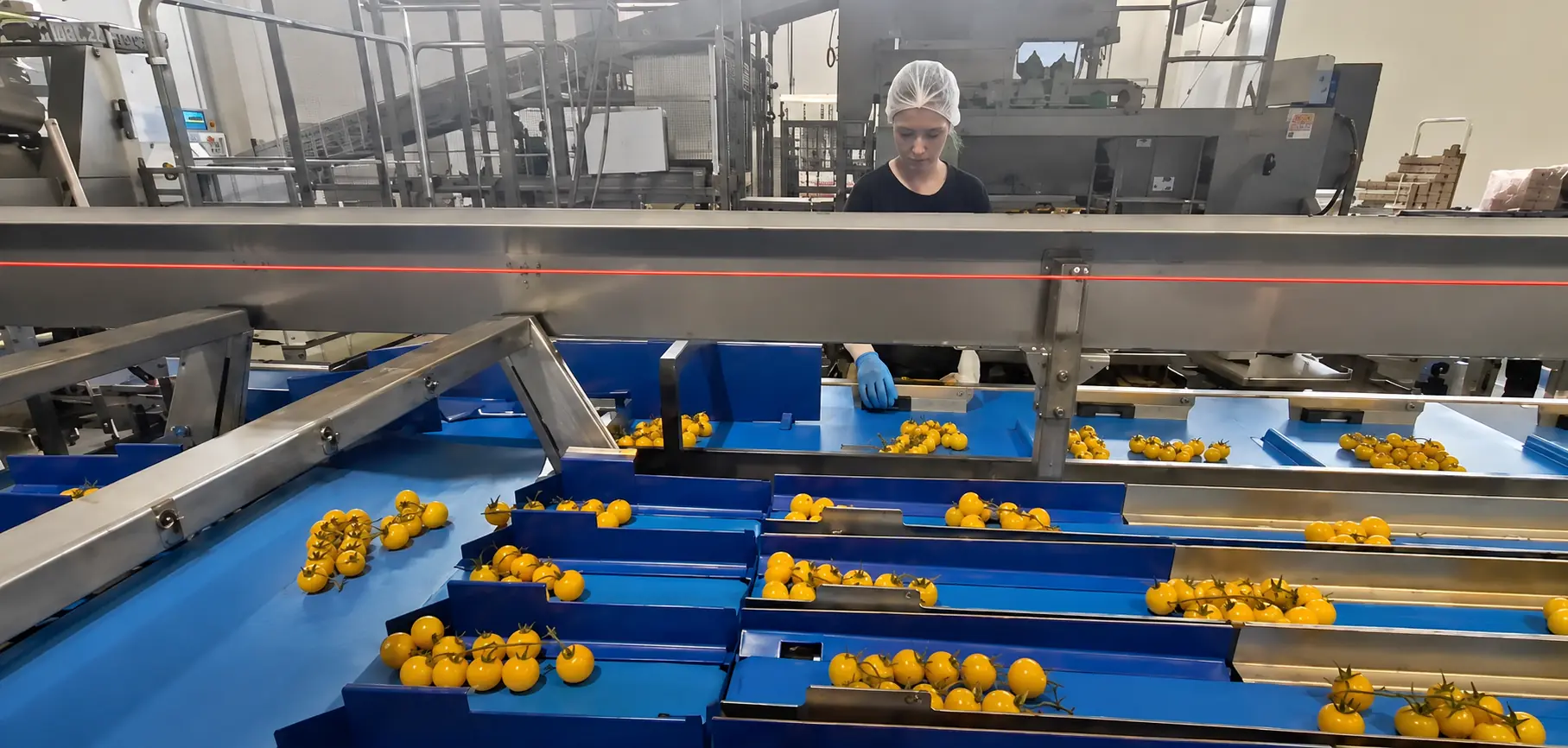
When the bottleneck is concentrated in weighing and packaging, solutions such as combination weighing systems or the Smart combination weigher can help stabilise the flow, reduce giveaway and ease the manual workload at the most stretched workstations.
Automation yes, but only in the right place
Adding automation in the wrong place speeds up one stage and congests the next. The priority is to intervene where the real constraint lies, not where technology is most visible. That is why machine selection must be made after mapping, not before.
If the goal is to build an integrated view of throughput, quality, precision and control, the Complete strategy to improve flows, precision and quality in the packing house is also useful.
30-60-90 day plan to reduce bottlenecks
In the first 30 days
- map a real flow by SKU or product family;
- identify the actual bottleneck;
- measure waiting times, WIP, changeovers and micro-stops;
- introduce minimum standards for shift start-up and batch changes.
Within 60 days
- balance operators and workstations;
- redesign buffers and FIFO lanes;
- realign packaging materials and bench layout;
- activate daily routines with clear indicators.
Within 90 days
- evaluate higher-impact layout changes;
- introduce automation or machine upgrades only at constraint points;
- connect line, quality and maintenance data;
- consolidate the path with the Complete guide to increasing productivity and control in the packing house.
FAQ
What is the first step to reducing bottlenecks in a packing house?
The first step is to map the real flow of a product or a typical batch for an entire shift, measuring cycle times, waiting times, WIP, changeovers, micro-stops and rework. Without this data, you intervene based on perception and risk shifting the bottleneck from one stage to another instead of eliminating it. A simple Value Stream Mapping, carried out on the shop floor, makes visible the losses that the layout alone does not show.
How do you recognise the real bottleneck on the line?
The real bottleneck is the stage with the lowest effective capacity and the greatest impact on the entire flow, not necessarily the machine that seems slowest. It can be recognised by observing recurring queues upstream, starvation downstream, build-ups, localised overtime, knock-on stoppages and worsening lead time. If one stage slows down the whole system even when the rest of the line is available, that is the constraint to manage.
Is it better to change the layout or standardise the work first?
In most cases it is better to standardise the work first and measure the results, because many problems stem from variable settings, slow format changeovers, disorganised replenishment and unclear roles. The layout should be reviewed when the data confirms crossings, unnecessary handling or poorly distributed space that impede the flow. In other words, method comes before building works and plant engineering.
Which technologies help most between grading and packaging?
Between grading and packaging, the technologies that help most are those that improve precision, continuity and speed of recipe changeover. Electronic graders, combination weighing systems, adjustment software and integration with the end of line reduce queues, rework and giveaway. The right choice, however, depends on the product, batch variability and the real capacity of the upstream and downstream stages.
How often should the packing house flow map be updated?
The flow map should be updated whenever the product mix, pack format, seasonality, staff, layout or machine configuration change. In the absence of major changes, a monthly or quarterly periodic review is good practice to check whether the bottleneck has stayed in the same place or has moved. In the packing house the constraint often changes with the season, so the map must be kept alive.