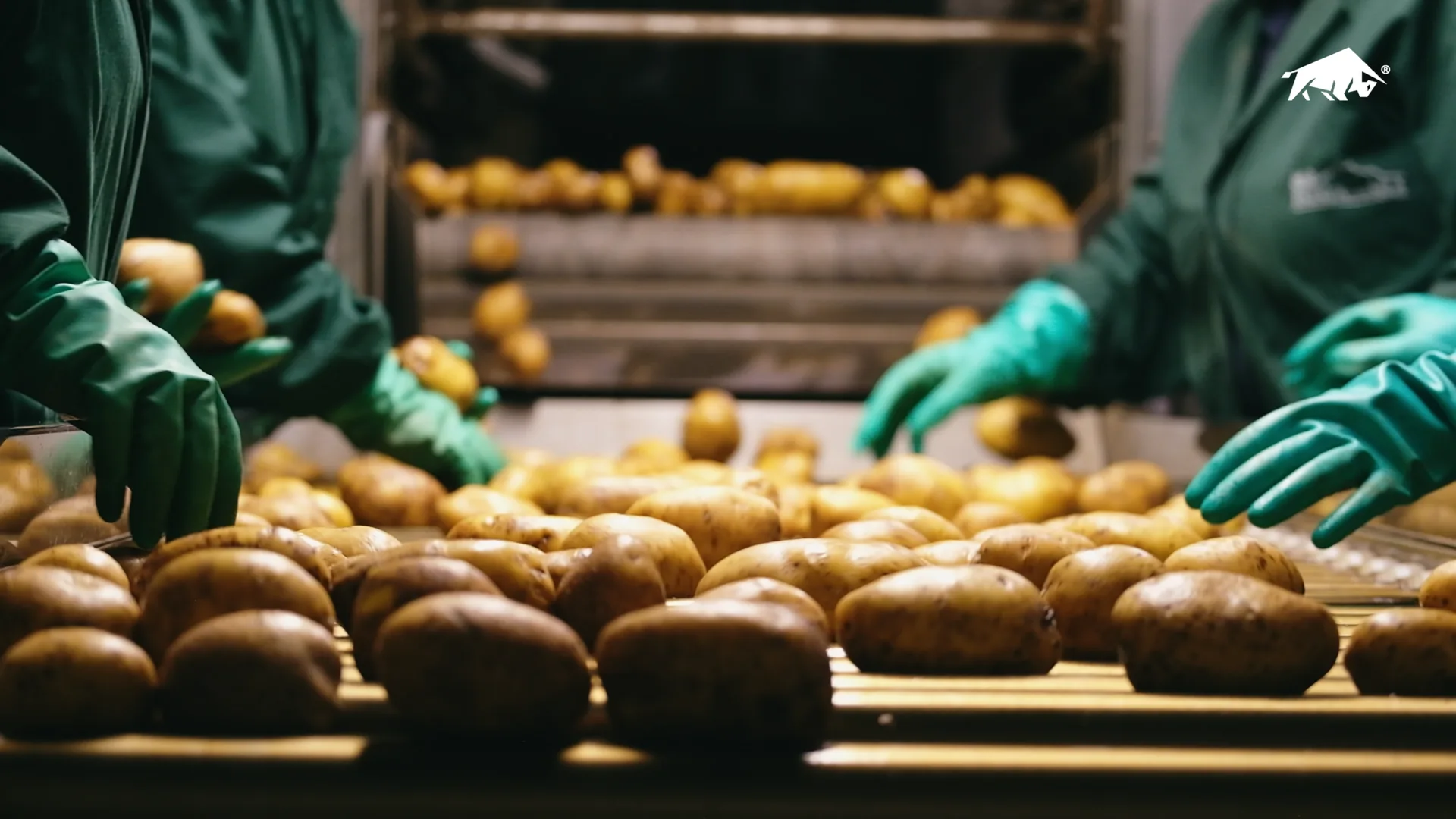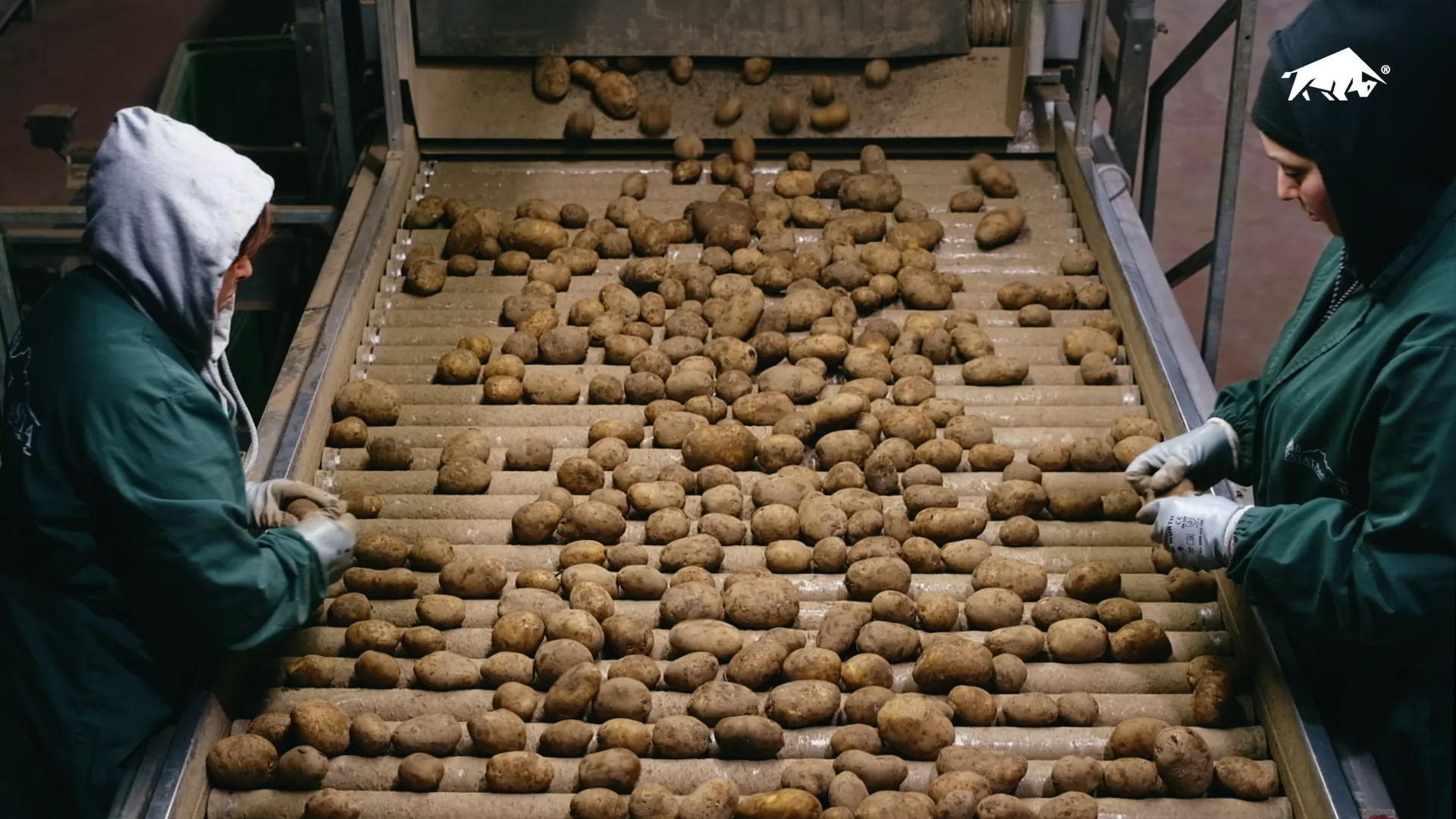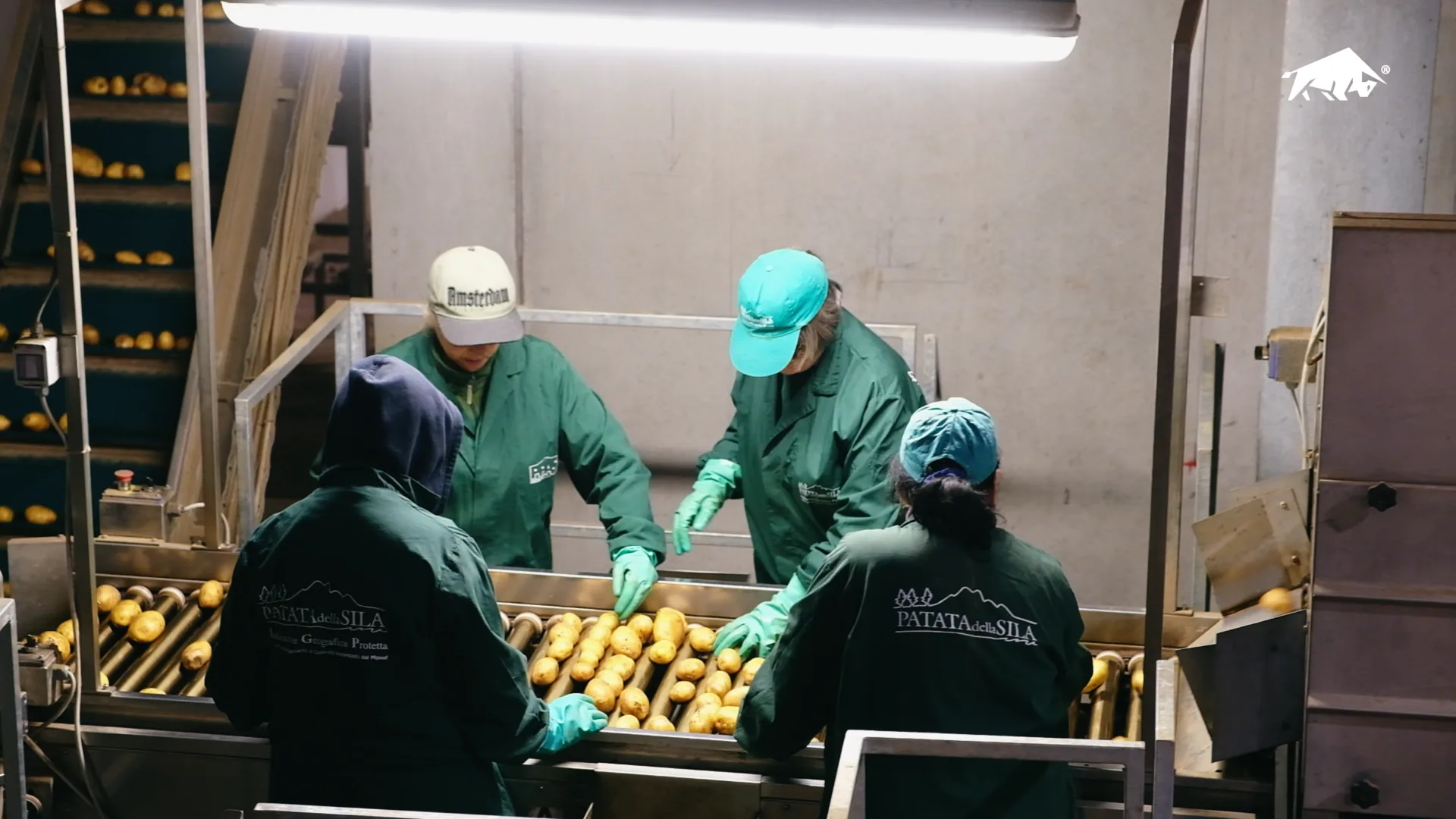

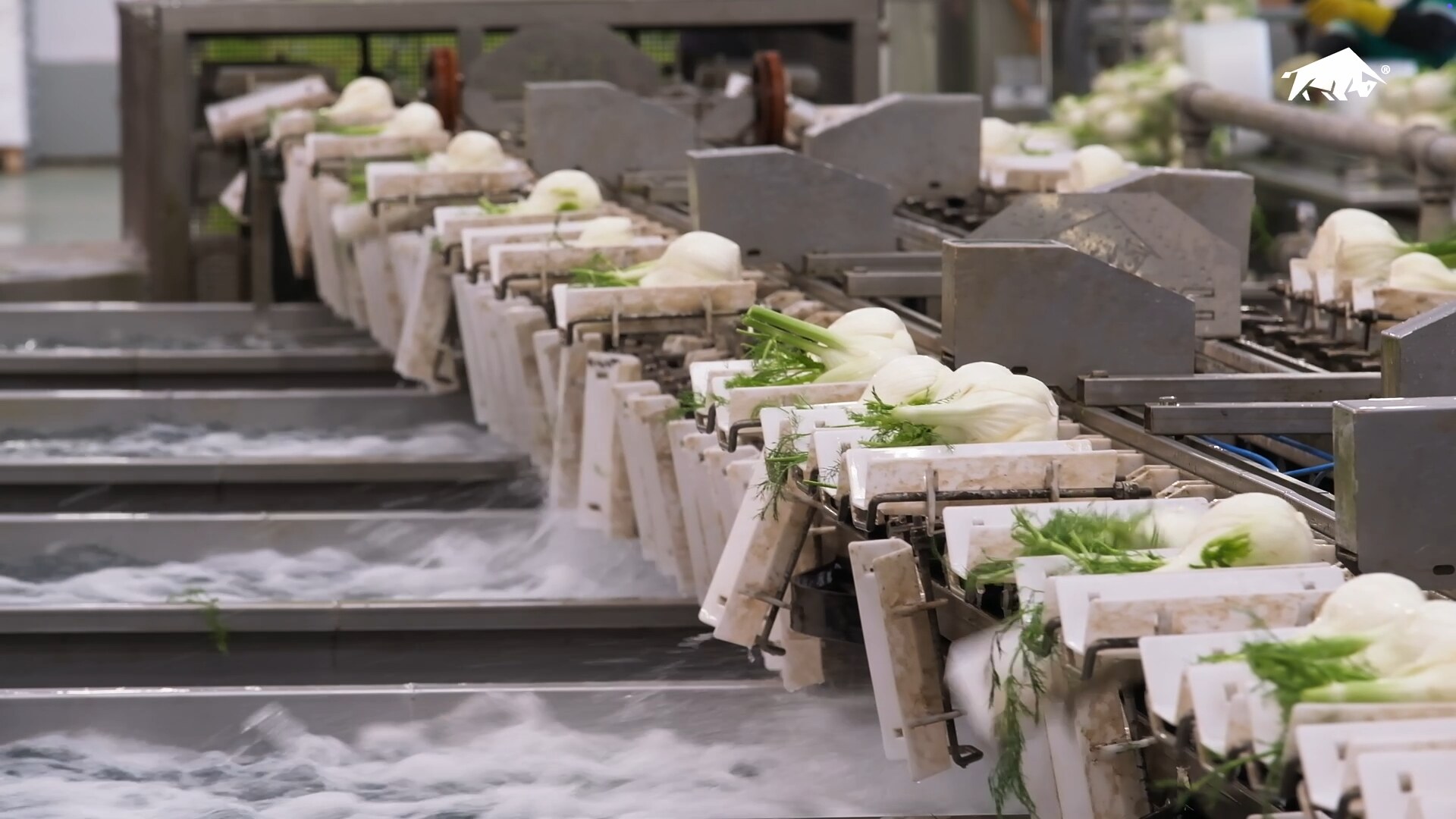
- Machine vision in fruit and vegetables for quality sorting standardizes judgment and makes criteria such as size, color, external defects and shape measurable, reducing variability and complaints.
- It works well when the product is presented in a stable way (singulated, constant speed, controlled lighting): line mechanics matter as much as the cameras.
- The key is not “AI”, but calibration + recipes by variety/batch + control of false rejects: without data governance, the system loses precision.
- Typical limits: internal defects, “under-skin” damage, wet/dirty surfaces and seasonal/variety changes; these are mitigated with setup, maintenance and metrics.
- Benefits are measured with concrete KPIs: commercial yield, waste, complaints, OEE, weight giveaway, and are amplified if integrated with weighing and traceability.
Machine vision for quality sorting in fruit and vegetables is not a “smart camera” mounted on the line: it’s a system that transforms an often subjective judgment (manual quality control) into repeatable measurements and usable data for production, purchasing and logistics. In post-harvest, where small defects become big complaints and where labor is increasingly hard to find, this shift makes the difference between “working a lot” and working well.
To place quality sorting within the complete flow (reception, washing, grading, packaging, palletizing), you can start from the complete guide to post-harvest automation for fruit and vegetables.
What quality sorting with machine vision in fruit and vegetables is (and what really changes)
Quality sorting with machine vision in fruit and vegetables is the set of hardware and software (lighting, sensors/cameras, algorithms, deflection actuators) that inspects each individual piece as it moves along the line and classifies it according to defined rules (size classes, color, defects, shape), diverting it to the correct channels.
In practice: from “opinion” to “measurable specification”
Manually, two operators can judge the same tomato differently, especially at the end of a shift or during production peaks. Machine vision, on the other hand, always applies the same thresholds (for example: percentage of visible defective area, color range, shape tolerance). This doesn’t eliminate “human” quality: it moves it upstream, where it’s needed most, i.e. in defining criteria and controlling the process.
Where it sits in the line
Vision is typically located:
- before grading (to remove gross waste/foreign objects)
- during grading (to match quality + size/weight)
- before packaging (to protect the pack standard and reduce complaints)
In modern lines, optical sorting works in synergy with weighing and packaging modules (e.g. combination weighing and guaranteed minimum weight systems) such as those found among Bulltec’s solutions (categories such as Combination Weighing and Smart Combination Weighing).
What can be measured: does machine vision in fruit and vegetables for quality sorting really “see”?
When evaluating a solution, the right question is not “does it recognize defects?” but which defects, with what stability, and under what line conditions.
Size and dimensions (diameter, length, apparent volume)
Diameter and overall size are among the most robust measurements: they work well on relatively regular vegetables (potatoes, onions) and on more variable products if presentation is correct. On grading lines (for example electronic channel/tray graders) size can be used to sort or to feed packaging logic.
Color and “visual” ripening
Machine vision measures color and its distributions (e.g. percentage of red/green on tomatoes, skin uniformity on peppers).
It’s useful for:
- “green / turning / ripe” classes
- batch uniformity for retail chains
- identifying superficial chromatic defects (yellowing, discoloration)
Note: “ripening” here means perceived (external) ripening. Internal parameters (Brix, internal firmness) require other techniques (NIR, hyperspectral, destructive testing).
External defects (bruises, cuts, visible rot, spots)
Optical sorting excels at surface defects:
- spots and abrasions
- wounds/lesions
- visible rot
- skin defects (depending on the product and contrast)
Shape and geometric defects
Shapes that are too elongated, flattened or off-standard can be:
- rejected
- separated into dedicated classes (second choice/industrial)
This is particularly useful when the pack requires uniform aesthetics (trays, baskets, flow-pack).
Foreign objects and obvious non-conformities
In some contexts (e.g. potatoes and carrots with soil/residue), vision can help separate non-compliant elements if they are visually distinguishable (color/texture/shape). The result depends heavily on managing dirt, moisture and lighting.
What is not measured (or poorly measured): physical limits before technological ones
This is where it’s decided whether a project will succeed or become a “machine that rejects too much”.
- Internal defects: black heart, internal damage, voids, non-visible problems.
- Under-skin damage: impacts that haven’t yet “marked” the surface (often emerge after hours/days).
- Organoleptic quality: taste, aroma, internal texture are not native measurements of an RGB camera.
- Microbiology: hygiene and contamination cannot be “seen” with standard vision alone; they’re managed through process, sanitation and specific controls.
Operational conclusion: machine vision should be designed as part of a quality system, not as a universal substitute for every control.
Quality criteria: translating specifications and retail standards into machine rules
The critical point is transforming words like “minor defects” or “good presentation” into numerical criteria.
From specification to thresholds: example of a 4-step method
- Define the classes (Extra / I / II / industrial) and what differentiates them.
- List the defects relevant to that product (e.g. scarring, rot, cracking, residual green).
- Decide the thresholds: maximum defective area, color intensity, shape tolerance.
- Validate with samples: a set of “training pieces” accepted/rejected, shared between quality, production and sales.
The most common mistake: one recipe for everything
Datterino tomatoes, cherry tomatoes and vine tomatoes have different textures and reflections; washed and unwashed potatoes completely change their visual “signature”.
Quality sorting works if you manage:
- variety
- season
- origin/batch
- surface conditions (wet/dry, presence of soil)
From a plant design perspective, this complexity must be anticipated in the layout and buffers: if the line can’t handle format and recipe changes, the technology won’t “recover” through software. Explore the flow and stability aspect further with Designing a post-harvest line without bottlenecks.
Data and calibration: settings, quality thresholds, variety/batch management, false reject control
Machine vision in fruit and vegetables for quality sorting lives on calibration. Installing it isn’t enough: it must be kept “in spec”.
Product recipes: variety, batch, season
Good practice is to set up “recipes” that include:
- lighting parameters (intensity, exposure)
- color and defect thresholds
- line speed and actuator timing
- classification rules per channel
When the system is integrated with batch management, the recipe can be recalled automatically at production change, reducing errors and downtime. This is also the bridge to traceability: see Traceability and data in post-harvest: batches, labels, MES/WMS and reports.
False rejects vs false accepts: how to manage the trade-off
Two metrics dominate:
- False Reject (FR): good pieces rejected → impacts yield and margin.
- False Accept (FA): defective pieces accepted → impacts complaints and reputation.
There is no “perfect” threshold that’s always valid.
The correct calibration depends on:
- sales channel (retail vs industrial)
- contractual tolerance
- cost of waste vs cost of complaints
A practical rule: at startup, start more “conservative” (fewer FA), then optimize to reduce FR without increasing complaints, using real return data.
Drift control: when the machine “changes its mind” without telling you
Over time, the following change:
- surface conditions (more moisture, more dust)
- lighting (dirt on glass/optics)
- vibration/positioning
- product mix
For this, simple routines are needed:
- scheduled cleaning of optics and the vision area
- daily check with reference samples
- waste reports by defect/channel (to detect drift)
Operational limits and failure modes: what can go wrong (and how to avoid it)
Product presentation: singulation and orientation
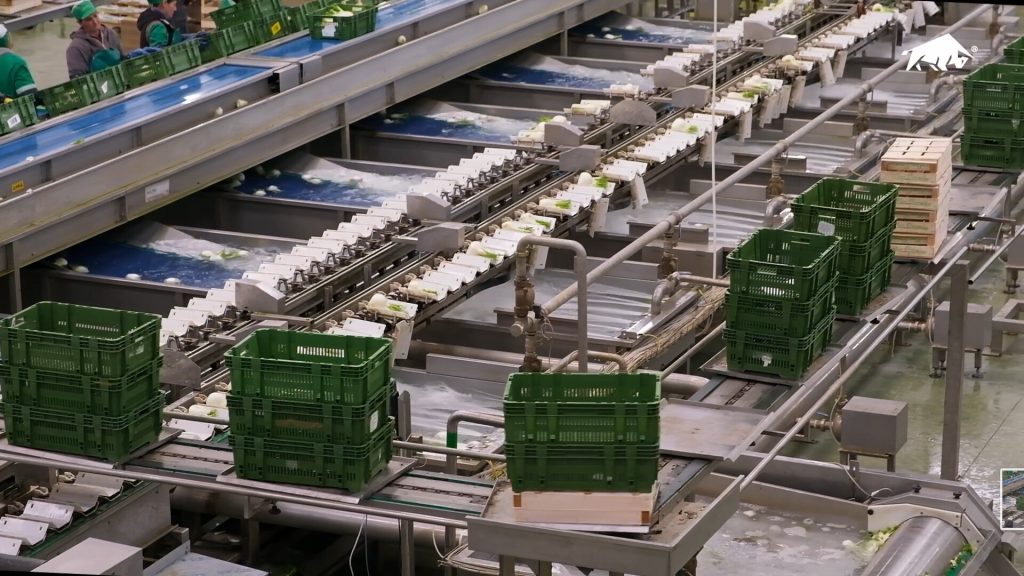
If the pieces: touch each other, rotate unpredictably, “bounce” on the belt, vision loses consistency. It’s often better to invest in: regular feeding systems, spacing, controlled speed and acceleration, even before “more powerful algorithms”.
Wet, shiny or dirty surfaces
Water and reflections can:
- mask defects
- create false positives (reflection mistaken for a spot)
- reduce contrast
Typical solutions:
- drying management
- shielding
- adequate lighting
- maintenance and dedicated “wet/dry” recipes
Rapid product changes and work shifts
When batch changes are frequent, the risk is that the operator:
- forgets to change the recipe
- modifies thresholds “on the fly” without tracking them
- loses control of the FR/FA trade-off
Here software ergonomics and operational discipline matter (change logs, user profiles, procedures).
Benefits: waste reduction, quality standardization, cause tracking (with KPIs)
The promise of machine vision is not “zero defects”: it’s control. The most solid benefits are measurable.
1) Quality standardization (and fewer complaints)
When quality sorting is consistent:
- batches are more uniform
- non-conformities decrease
- sales can better meet specifications and classes
In practice, quality becomes replicable even when the team changes or volume increases.
2) Better commercial yield (less “fear-based” waste)
In many manual lines, waste is created in excess to avoid disputes.
With measurable criteria you can:
- reduce “defensive” waste
- create sellable intermediate classes (second choice)
- automatically direct product to different channels (fresh vs industrial)
3) Cause data: from “I think” to the Pareto of defects
If the system records how many units are rejected for each defect (spot, wound, non-compliant color), you get a Pareto that helps to:
- improve harvesting and handling
- correct washing/brushing
- reduce mechanical damage on the line
- negotiate better with suppliers (data in hand)
4) Related KPIs: OEE and giveaway
Quality sorting also impacts:
- OEE (fewer stoppages due to disputes and rework)
- giveaway if integrated with weighing and minimum-weight packaging logic (a topic often connected to combination weighing systems)
For an end-to-end view of the business case (priorities, ROI, bottlenecks), refer to the complete guide to post-harvest automation for fruit and vegetables.
How to evaluate a solution: mini-checklist for choosing (or retrofitting)
Technical questions (to ask before the demo)
- What throughput is required (pieces/hour) and with what seasonal peaks?
- How many classes/channels are really needed today and in 2 years?
- How does the recipe change happen (manual/automatic)?
- Is it tracked?
- Are there reports on FR/FA, waste by cause and adjustment history?
- How simple is cleaning (optics, guards, accumulation areas)?
Line integration questions
- Is it compatible with existing weighing and packaging?
- Are buffers/accumulation needed to stabilize the flow?
- How are format changes and product mix managed?
If you want to avoid vision becoming the new bottleneck, the layout and synchronization part is decisive: Designing a post-harvest line without bottlenecks.
Integration with traceability: from quality sorting to the batch (and the pallet)
Quality sorting creates valuable data: what you rejected, when and why. If it stays in the machine, it’s worth little. If it’s connected to: the incoming batch, the applied recipe, the packages produced, weights and logistics units, it becomes a management control and audit tool.
Examples of useful outputs:
- yield by batch and by class
- main causes of waste by supplier/plot
- evidence in case of disputes
- production-shipment reconciliation
To design this level (barcode/QR, print-and-apply, MES/WMS, reports), see Traceability and data in post-harvest: batches, labels, MES/WMS and reports.
FAQ
Which post-harvest stages benefit most from automation?
The stages that benefit most from automation are those with high labor intensity and high variability: feeding and handling, grading/sorting, weight packaging, labeling and end of line. In practice, automation creates value when it reduces repetitive errors (misclassification, non-compliant weight), when it stabilizes throughput and when it makes production data available. A complete map of stages and investment priorities is described in the complete guide to post-harvest automation for fruit and vegetables.
How do I understand if my bottleneck is in quality sorting or elsewhere?
The most reliable way is to measure downtime, micro-stops and station saturation, connecting them to actual throughput and product mix variability. Sorting often appears slow, but the real cause is upstream (irregular feeding) or downstream (unsynchronized packaging). A layout, buffer and line balancing analysis helps avoid investments “in the wrong place”: see Designing a post-harvest line without bottlenecks.
Does machine vision completely replace human quality control?
Machine vision doesn’t replace “quality” but automates its repetitive and measurable part, leaving people the higher-value task: defining criteria, managing exceptions, controlling drift and improving the process. In many plants, human control remains useful as sample-based auditing and as support during seasonal/variety changes, when conditions change and recipes need to be re-optimized.
What KPIs should I monitor to assess the success of optical sorting?
The most useful KPIs are those that connect quality and margin: total waste percentage and by cause, yield by commercial class, complaints/disputes, false rejects (estimated through sampling), hourly productivity and impact on OEE. If the line includes minimum-weight packaging, giveaway (weight excess) is also important because it directly affects the cost of the product sold. The goal is not “lower waste”, but “the right waste” based on channel and standards.
How is quality sorting connected to traceability and audit reports?
It’s connected by recording production events (batch, recipe, classification, waste, weights) and making them available to management systems (MES/WMS/ERP) or line reports. This way you can trace not only “which batch ended up in which pallet”, but also “which defects were prevalent” and “which parameters were active”, improving both complaint management and continuous improvement. A practical setup of the data model and technologies is explained in Traceability and data in post-harvest: batches, labels, MES/WMS and reports.
Does machine vision for quality sorting in fruit and vegetables work on all products?
Machine vision in fruit and vegetables for quality sorting works very well on external defects and geometric/chromatic criteria, but it’s not universal: very shiny, very dirty products, or those with predominantly internal defects require different expectations and setups. In general, the more you manage to stabilize presentation, cleanliness and lighting, the more repeatable performance becomes. That’s why the choice isn’t just “which camera”, but “which line architecture” and which operating procedures.
How can false rejects be reduced without increasing complaints?
They’re reduced by working on three levels: (1) improving product presentation and image quality (singulation, stable speed, clean optics), (2) using differentiated recipes by variety/batch and recalibrating with reference samples, (3) measuring over time the balance between false rejects and false accepts through sampling and complaint feedback. The best approach is iterative: start conservative and optimize with real data, avoiding “gut feeling” adjustments.
What is the most underrated benefit of quality sorting with machine vision?
The most underrated benefit is the transformation of defects into operational information: knowing precisely what you’re rejecting (and when) allows you to intervene in harvesting, transport, washing and internal handling. This reduces mechanical damage, improves yield and creates objective bases for comparisons between batches, suppliers and times of year. In other words, vision is not just a sorter: it’s a process sensor that enables continuous improvement.